
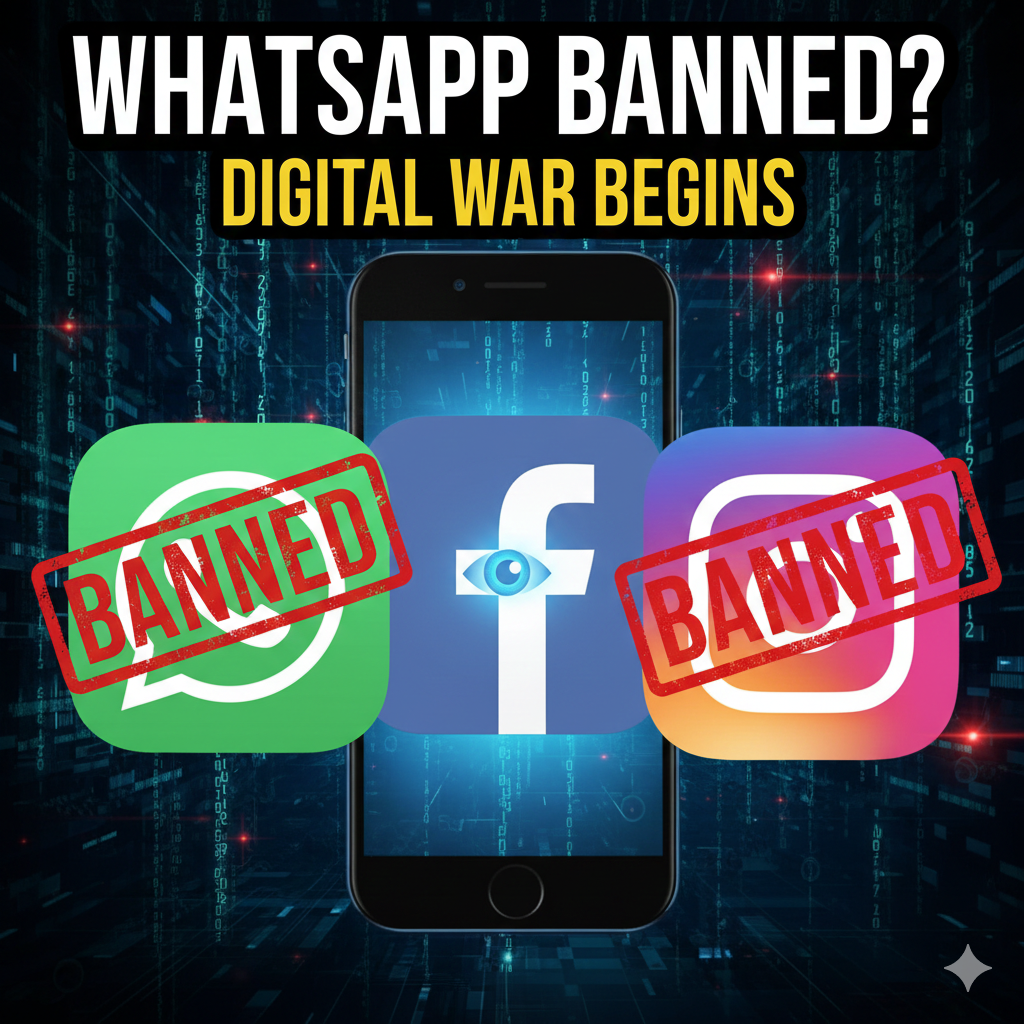
Introduction WhatsApp Facebook Instagram Ban
As governments around the world attempt to ban or regulate platforms like WhatsApp, Facebook, Instagram, and YouTube, a major debate is emerging: are these apps tools for free speech or tools for digital influence and national weakness?
From Russia’s ban on Western platforms to Australia’s ban on social media for children under 16 and India’s tightening of IT regulations, the global digital ecosystem is changing. This article examines the growing trend of social media bans, the national security rationale behind them, data privacy concerns, encryption controversies, the mental health debate, and the geopolitical aspects of digital sovereignty.
Is the world entering an era of digital warfare—where algorithms matter more than missiles? Or is it simply governments trying to control the conversation?
Table of Contents
Summary (WhatsApp Facebook Instagram Ban)
As governments around the world attempt to ban or regulate platforms like WhatsApp, Facebook, Instagram, and YouTube, a major debate is emerging: are these apps tools for free speech or tools for digital influence and national weakness?
From Russia’s ban on Western platforms to Australia’s ban on social media for children under 16 and India’s tightening of IT regulations, the global digital ecosystem is changing. This article examines the growing trend of social media bans, the national security rationale behind them, data privacy concerns, encryption controversies, the mental health debate, and the geopolitical aspects of digital sovereignty.
Is the world entering an era of digital warfare—where algorithms matter more than missiles? Or is it simply governments trying to control the conversation?
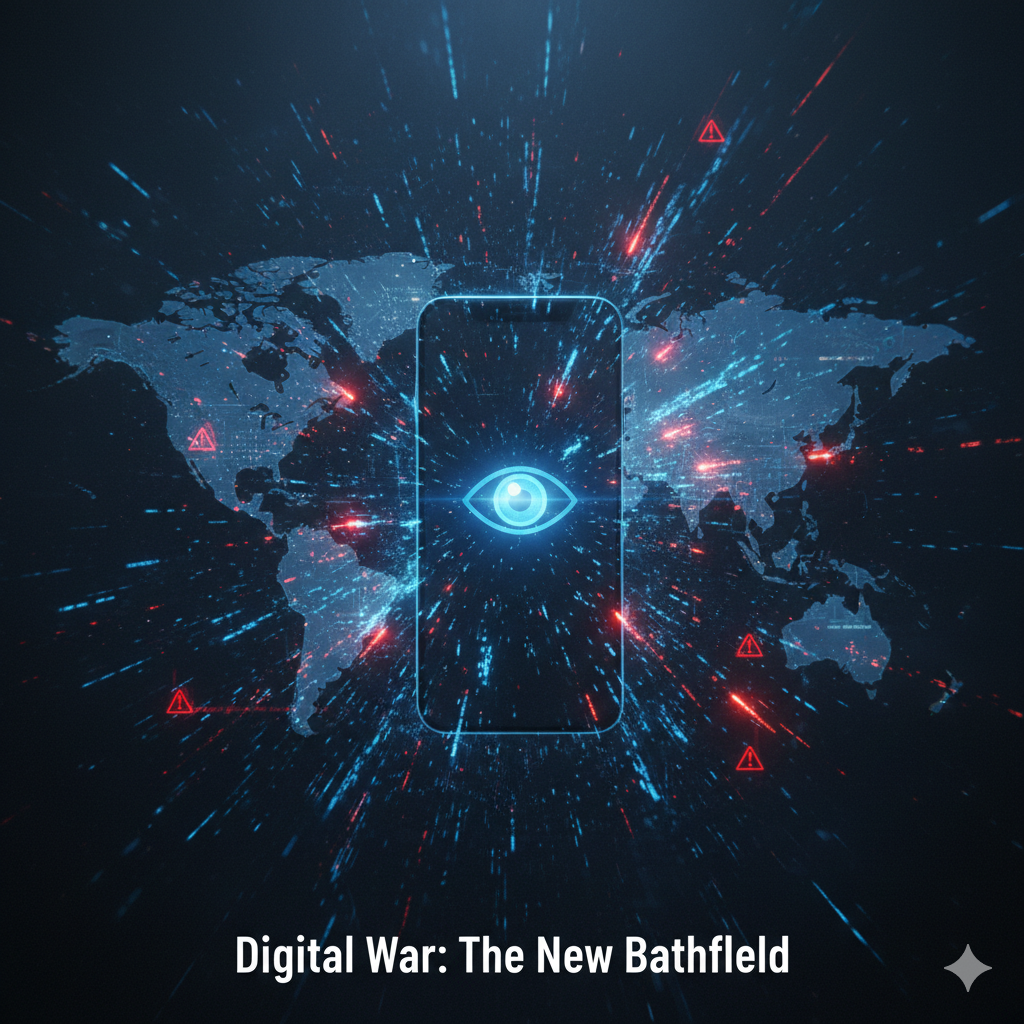
Social Media as an Information Warfare Tool (WhatsApp Facebook Instagram Ban)
Digital influence operations are increasingly becoming a part of today’s conflicts. Viral misinformation can destabilize communities in a matter of hours. Coordinated campaigns can shape political discourse and influence public opinion.
Information warfare doesn’t require missiles. It requires algorithms.
Data is often called the new oil—or even the new weapon. Platforms capable of generating large-scale narratives wield immense soft power.
This reality is forcing governments to rethink their digital dependency.
The Mental Health Perspective
Beyond security and politics, research is also revealing the psychological impact of algorithm-driven content. Platforms are designed for engagement, which often triggers dopamine responses through likes and shares.
Internal corporate documents released during the investigation revealed awareness of some negative mental health impacts.
This has added another point to the debate: should profit-driven algorithms dictate the emotional climate of an entire generation?
Should India consider a ban? (WhatsApp Facebook Instagram Ban)
The question naturally arises: If other countries ban these platforms, should India consider similar measures?
A complete ban would disrupt communication, business, and the digital economy. However, strong data localization rules, algorithm transparency requirements, and child protection regulations could offer a middle ground.
The real issue isn’t just about banning or allowing apps. It’s about defining the boundaries of digital sovereignty.
The Conclusion: Stepping into the Age of Digital Warfare (WhatsApp Facebook Instagram Ban)
The smartphone you hold isn’t just a communication device. It’s a data terminal connected to global servers, advertising networks, and algorithmic systems.
We’re witnessing a shift where digital platforms are being considered strategic assets. Countries are increasingly unwilling to outsource control over data, speech, and impact.
Whether through bans, regulations, or local approaches, the global message is clear: the era of unchecked digital dominance is coming to an end.
The future will be determined by how governments, companies, and citizens rebalance freedom, privacy, and security in a world where data has become power.
Frequently Asked Questions
- Why are some countries banning WhatsApp, Facebook, and Instagram?
Some governments argue that foreign social media platforms pose a threat to national security, spread misinformation, and allow foreign influence in domestic politics. Others argue that bans are necessary to protect data sovereignty and information control.
- Is WhatsApp truly secure with end-to-end encryption?
WhatsApp uses end-to-end encryption, which means that only the sender and recipient can read messages. However, metadata such as contact patterns and timestamps can still be collected, raising privacy concerns.
- Can governments read encrypted WhatsApp messages?
In most cases, governments cannot read encrypted messages directly. However, they can request metadata or device-level data through legal proceedings.
- Why did Australia ban social media for children under 16?
Australia passed legislation to protect minors from mental health risks, online exploitation, and privacy violations, and imposed strict penalties on companies that fail to enforce age limits.
- Has India banned WhatsApp or Facebook?
India has not banned WhatsApp or Facebook. Instead, it regulates the platforms under the IT Rules 2021 and the Digital Personal Data Protection Act to ensure compliance with Indian law.
- Are social media platforms used for information warfare?
Experts say that social media can influence public opinion, spread misinformation, and shape political outcomes, making them tools for modern digital or hybrid warfare.
- Should India consider banning these apps?
This issue is still under debate. Some advocate for stricter regulation rather than a blanket ban, focusing on data protection, transparency, and child safety.
Thanks for visiting us.