
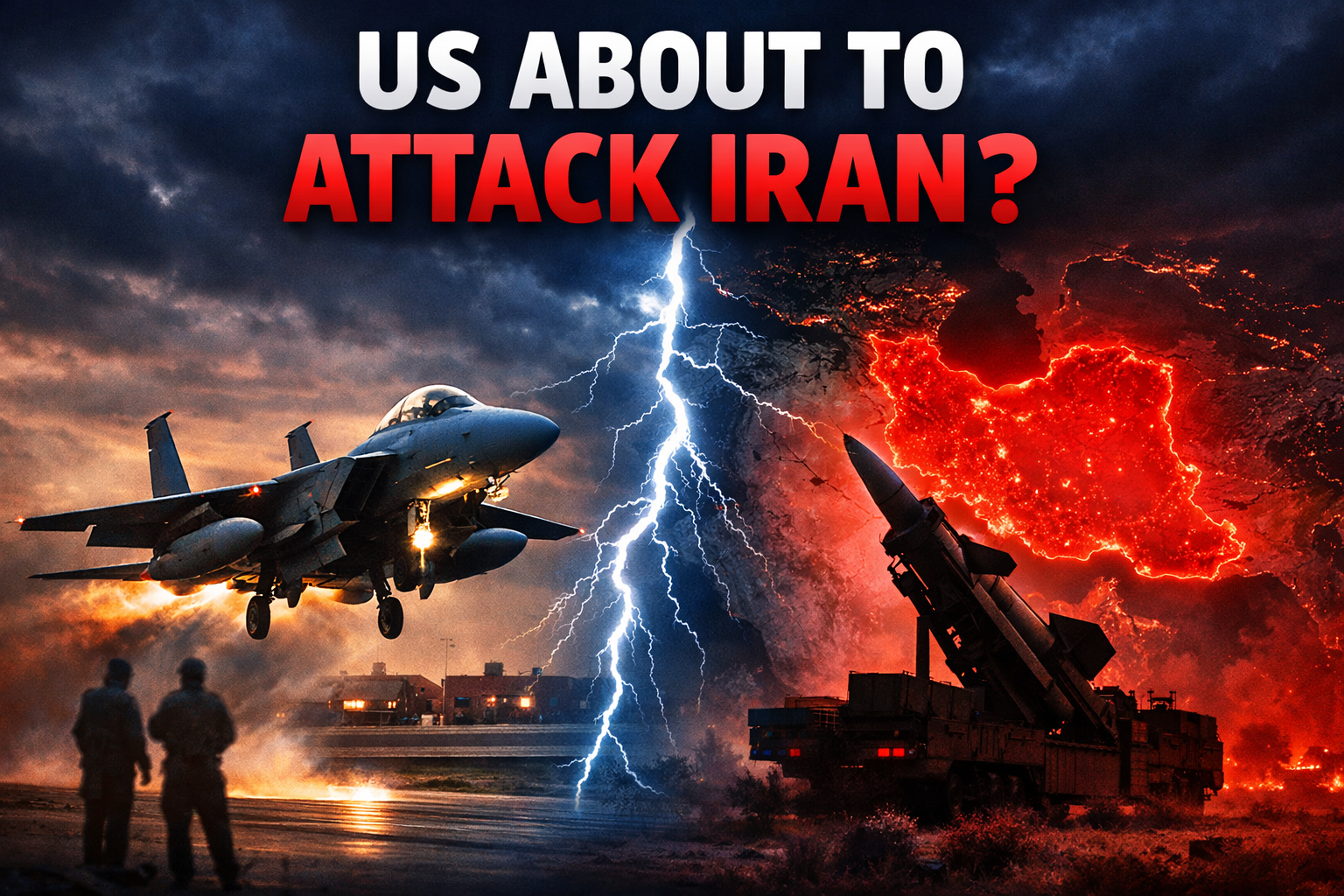
US Iran Conflict
Introduction (US is About to Attack Iran?)
An in-depth analysis of the escalating tensions between the US and Iran, amid new satellite imagery showing US military presence in Qatar, Jordan, Saudi Arabia, and Diego Garcia. This article examines diplomatic failures, nuclear negotiations, Israel’s role, potential causes of war, economic consequences, and why a full-scale war remains uncertain but dangerously possible.
Outline Structure: (US is About to Attack Iran?)
- Introduction – Why tensions are rising now
- Satellite evidence of US military buildup
- Breakdown of deployments across key bases
- Offensive vs defensive strategy – What experts say
- Possible triggers that could spark war
- Israel factor and political calculations
- Global economic impact – Oil, inflation & markets
- Why the US may still avoid war
- Conclusion – Real risk or strategic pressure?
US-Iran War Tensions Rise: Satellite Images Reveal Military Preparations in the Middle East
Summary
Geopolitical temperatures in the Middle East are rising again as new satellite images reveal a significant buildup of US military personnel at a specific base near Iran. With nuclear talks stalled and diplomatic channels strained, analysts are questioning whether the region is on the brink of another major conflict. While military positioning does not guarantee war, the scale and intensity of the current deployment suggests the situation is more serious than commonly believed.
This article examines the military preparations, the political context behind them, potential reasons for escalation, and the global economic consequences if tensions escalate into open conflict.
Rising Tensions Between the US and Iran(US is About to Attack Iran)
Tensions between the US and Iran have fluctuated for years, but recent developments indicate a more volatile phase. Diplomatic talks on Iran’s nuclear program have stalled. Reports indicate that talks between senior leaders, including former US President Donald Trump and Israeli Prime Minister Benjamin Netanyahu, failed to reach a definitive agreement on Iran’s nuclear and missile activities.
Meanwhile, Iran has issued a stern warning that any direct military action against its territory will be met with a strong response. Rhetoric has escalated on both sides, creating an atmosphere of strategic uncertainty.
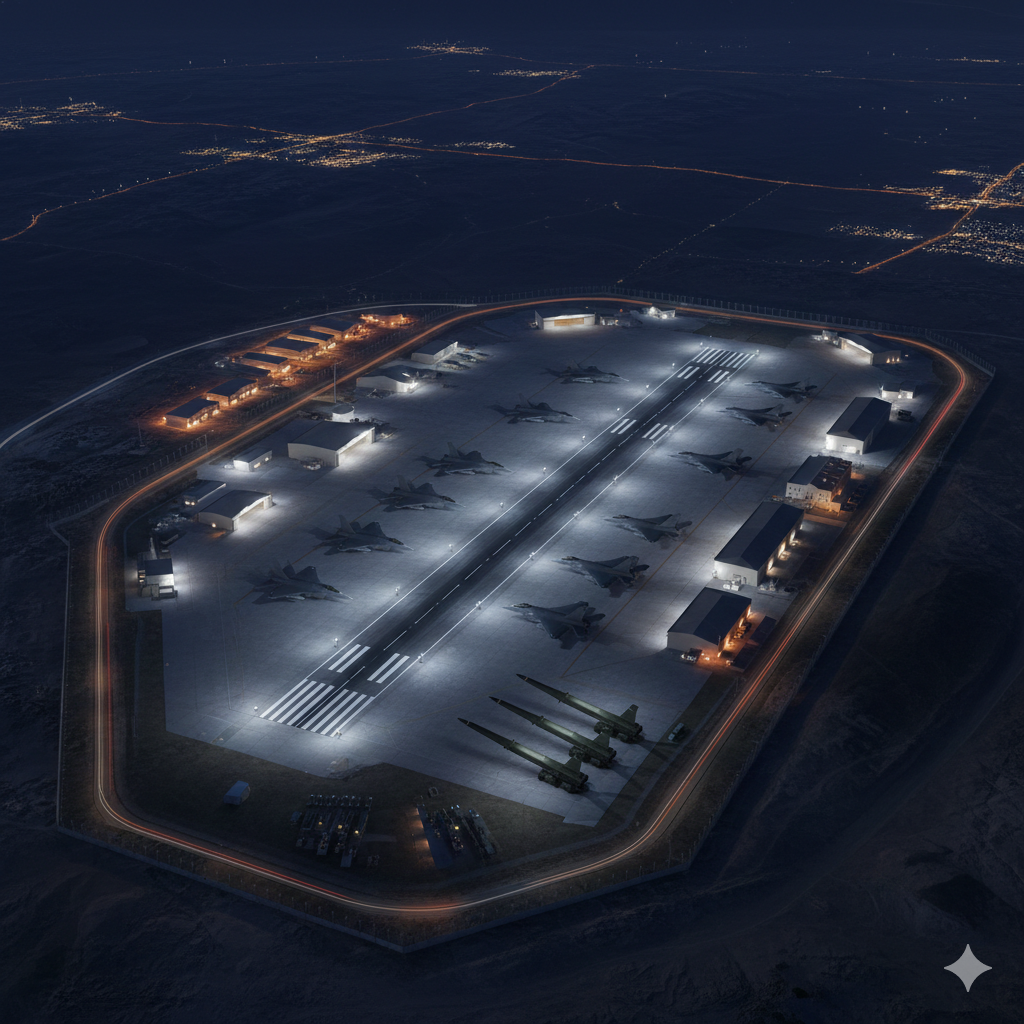
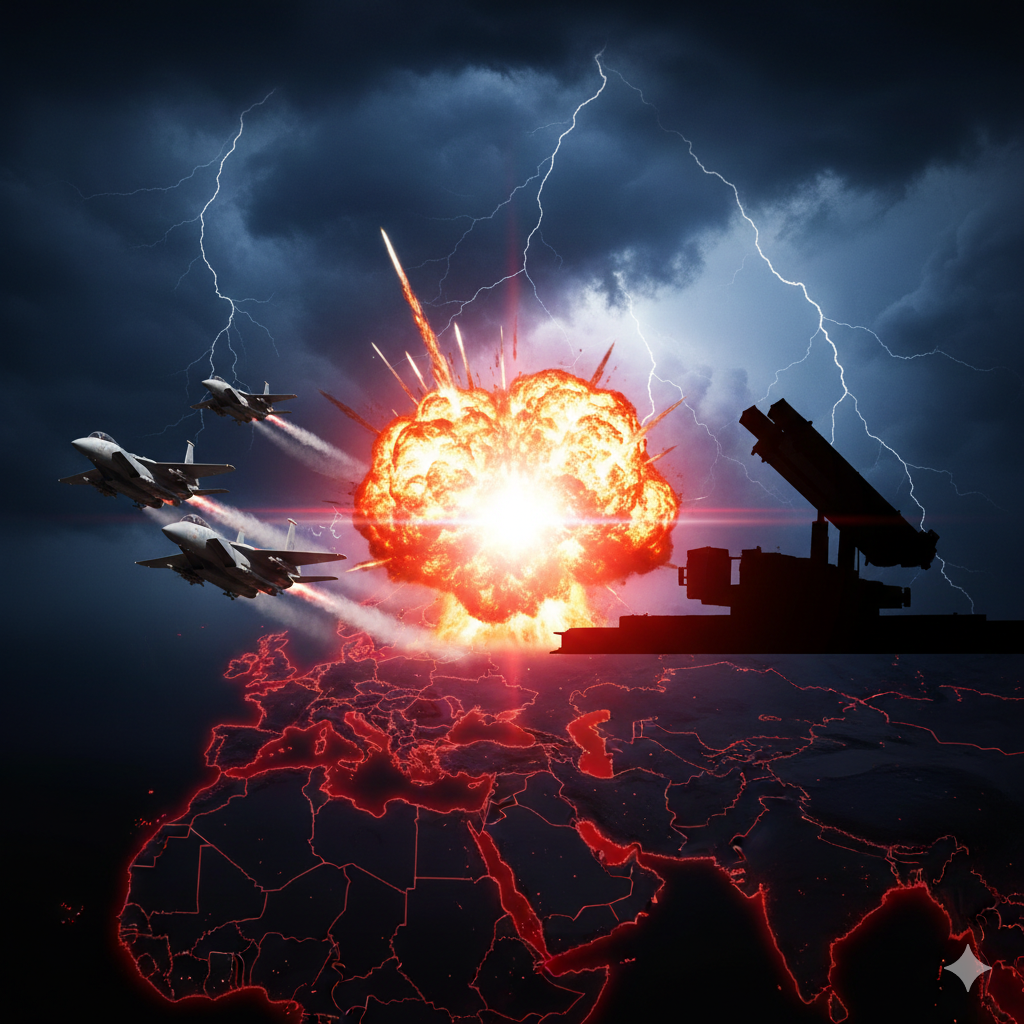
Recent satellite images have revealed increased activity at several US bases in the Middle East. At Al Udeid Air Base, the largest US military installation in the region, fighter jets and Patriot missile defense systems are visible in operational positions. With approximately 10,000 US personnel deployed there, the base is a central hub for both offensive and defensive operations.
In Jordan, activity at Muwaffaq Salti Air Base shows the deployment of F-15 fighter aircraft, A-10 ground attack planes, and MQ-9 drones – assets typically associated with precision strike and air superiority missions.
Similarly, logistics aircraft such as C-17 and C-5 transport planes have reportedly been deployed at Prince Sultan Air Base. These aircraft are essential for troop movement, supply transport, and sustained military operations. Meanwhile, Diego Garcia, strategically located in the Indian Ocean, appears to be active as a long-range staging and support base.
Offensive Preparation or Defensive Posture? (US is About to Attack Iran)
Military experts attribute two main implications to this buildup. The first possibility is offensive preparation—a limited, targeted strike on Iranian nuclear or missile facilities. Such an operation would likely be designed to degrade Iran’s capabilities without triggering a prolonged ground war.
The second possibility is defensive positioning. Iran has repeatedly warned that if provoked, it could retaliate against US bases in Iraq, Syria, or the Gulf region. Therefore, strengthening air defense systems and rapid-response capabilities may be a precautionary measure rather than an aggressive one.
Importantly, force positioning alone does not confirm impending action. Historically, military buildups sometimes serve as leverage in diplomatic negotiations rather than triggering war.
Potential Triggers for Escalation (US is About to Attack Iran)
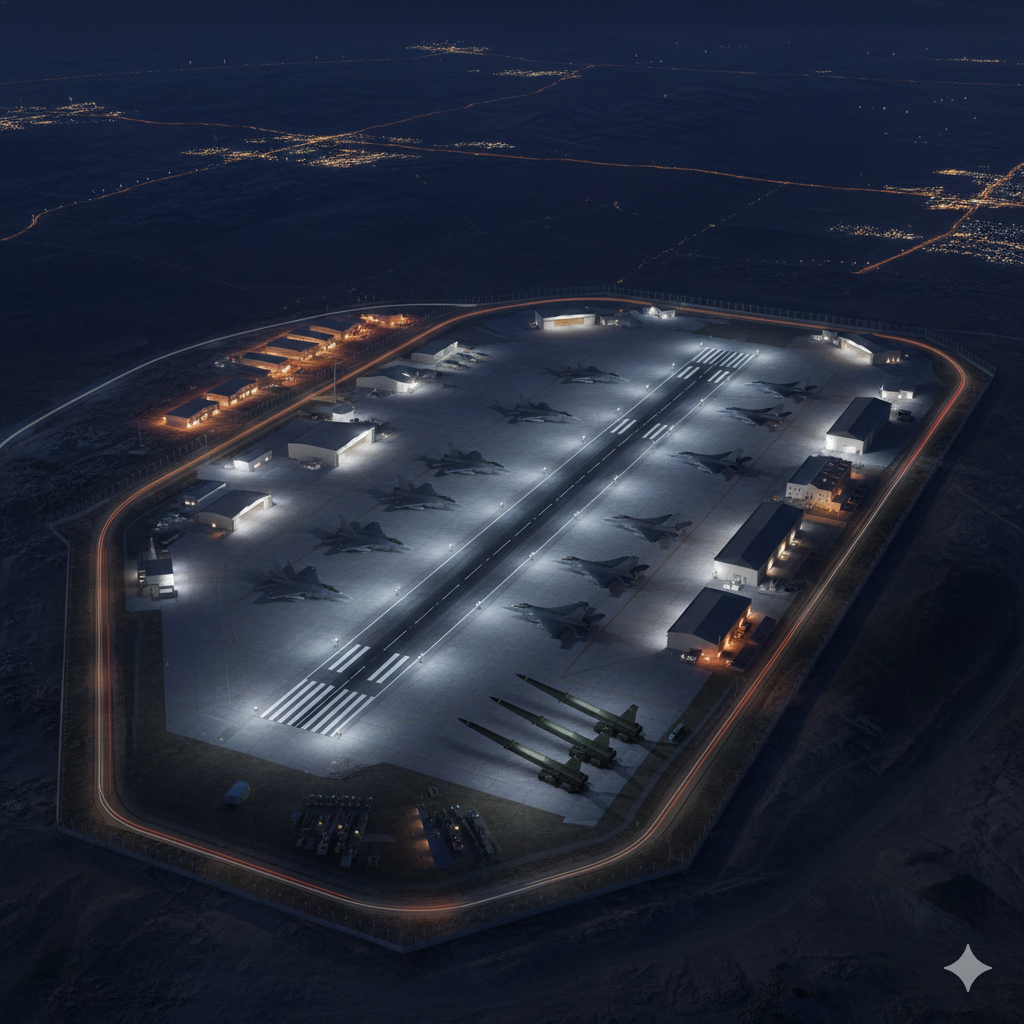
Several scenarios could escalate tensions into direct confrontation. An attack on U.S. troops in Iraq or Syria, a missile strike targeting a U.S. base in the Gulf, or naval incidents in the Strait of Hormuz could rapidly escalate the situation.
Iran-backed groups such as Hezbollah or the Houthi movement could also become flashpoints if their actions are attributed to Tehran. Even a miscalculation at sea involving a U.S. aircraft carrier and Iranian naval units could trigger a regional conflict.
The Israel Factor and Political Calculations (US is About to Attack Iran)
Israel has consistently expressed concern about Iran’s nuclear intentions. Prime Minister Benjamin Netanyahu has publicly stated that Iran’s nuclear infrastructure poses a threat to its existence. Any direct attack on Israel would trigger U.S. sanctions. could significantly increase the likelihood of involvement.
Domestic politics also play a role. Elections and political pressures shape policy decisions, so leaders may assess strategic risks differently based on internal considerations. However, getting embroiled in another conflict in the Middle East carries significant political consequences.
Global Economic Consequences (US is About to Attack Iran)
If war breaks out, its economic consequences will extend far beyond the region. The Strait of Hormuz handles a significant portion of global oil shipments. A blockage there could cause oil prices to rise sharply, leading to increased inflation worldwide.
Financial markets could react quickly, and global supply chains – already strained by geopolitical tensions – would face further instability. For countries like India that rely heavily on energy imports, this economic blow could be significant.
Why a full-scale war is uncertain (US is About to Attack Iran)
Despite alarming military signals, a full-scale war remains uncertain. Iran is not a small or isolated country; it has regional alliances and proxy networks capable of responding indiscriminately. This tension could quickly escalate into a major Middle East conflict involving Lebanon, Iraq, Syria, and Yemen.
Furthermore, diplomatic channels are open. Mediators like Oman and Qatar are continuing efforts to de-escalate tensions. Military pressure could ultimately become a means to advance dialogue rather than trigger an attack.
Conclusion (US is About to Attack Iran)
The current U.S.-Iran tensions are one of the most serious geopolitical flashpoints of this year. Satellite images confirm that military preparations are underway at key regional bases. Yet, preparations do not necessarily mean they are necessary.
The coming weeks will determine whether diplomacy will succeed or lead to a miscalculated confrontation. For now, the risk is real—but war is by no means guaranteed.
Frequently Asked Questions (FAQs) (US is About to Attack Iran)
- Is the US planning to attack Iran?
There has been no official confirmation that the United States is planning to attack Iran. However, recent military deployments and satellite images showing increased activity at US bases in the Middle East have fueled speculation. Experts believe this preparation could be either defensive or a ploy to exert pressure amid stalled nuclear negotiations.
- Why are US-Iran tensions rising?
Disagreements over Iran’s nuclear program, missile development, and regional impact are fueling tensions. Diplomatic talks are reportedly stalled, while both countries have issued warnings, raising the risk of escalation.
- What military preparations has the US made near Iran?
Satellite images show increased US military preparations at bases in Qatar, Jordan, Saudi Arabia, and Diego Garcia. Reports mention the deployment of fighter jets, Patriot missile systems, transport aircraft, and aerial refueling assets in the area.
- Could Israel be involved in a US attack on Iran?
Israel has consistently expressed concern about Iran’s nuclear activities. If Israel is directly threatened, US involvement could increase. However, no official joint military operation has been announced.
- What could trigger a US-Iran war?
Potential triggers include:
Direct attacks on US troops in Iraq or Syria
Missile attacks on US bases
Naval incidents in the Strait of Hormuz
Increased tensions between Iran-backed proxy groups
Even a small mistake could escalate into a major conflict.
- How would a US attack on Iran affect oil prices?
If the conflict blocks the Strait of Hormuz – a vital route for oil shipments around the world – oil prices could rise significantly. This could lead to increased inflation worldwide, including in India and other energy-importing countries.
- Is a full-blown war likely between the US and Iran?
Although military tensions are high, a full-blown war is not guaranteed. Both countries understand the economic and geopolitical implications. Diplomatic channels remain open, reducing the likelihood of a large-scale conflict immediately.
- What impact will a US-Iran war have on India?
India is heavily dependent on oil imports from the Middle East. Any disruption could increase fuel prices, impact inflation, and impact financial markets. Furthermore, if the fighting spreads, Indian citizens in the Gulf region could face uncertainty.
- Does this crisis involve nuclear weapons?
The main concern is Iran’s nuclear enrichment program. However, there is currently no concrete evidence of active use of nuclear weapons. Most discussions revolve around inspections and enrichment limits.
- What is the current status of US-Iran diplomatic talks?
Reports indicate that talks are ongoing but remain fragile. Mediators like Oman and Qatar are involved in de-escalating tensions. The outcome of these talks will likely determine whether the crisis escalates or stabilizes.
Thanks for visiting us.
Table of Contents (US is About to Attack Iran)
- 23-Year-Old Sahil Killed, Mother Says ‘My Son Was Left on the Road’ Delhi Scorpio Accident News
- Ajit Bharti vs RSS Controversy: Why Is RSS Angry with Ajit Bharti? Full Story Explained
- The fastest way to end corruption in India?
- WhatsApp Facebook Instagram Ban – National Security ya Control?
- PM Kisan 2026 Update: New Eligibility Rules