
Synopsis – Why Tamil Nadu Does NOT Like Rama?
The common perception that Tamil Nadu “hates” Lord Rama is one of the most misrepresented narratives in today’s Indian discourse. This perception, fuelled largely by sensationalist media coverage and various political protests, ignores the deep historical, literary, and devotional connection Tamil culture has always had with the Ramayana and Rama himself. This article connects the origins of this controversy to the rise of Dravidian political ideology in the twentieth century, particularly the influence of Periyar E.V. Ramasamy, who reimagined the Ramayana as a story of Aryan domination over Dravidian identity.
By examining in detail events like the 1971 Salem incident and the politically staged “Ravana Leela,” this article illustrates how acts of divergent ideologies were widely portrayed as cultural sentiment. Drawing on cultural perspectives, literary traditions such as Kamban’s Ramayana, and the enduring presence of ancient Rama temples across Tamil Nadu, this article establishes that the state’s relationship with Rama is not one of hatred, but of a quiet, deep devotion that has long existed beyond the noise of politics.
Outline: Why Tamil Nadu Does NOT Like Rama?
- Introduction
A narrative overview of how media clips, political speeches, and select events have created the impression that Tamil Nadu dislikes Lord Ram, despite the state’s long-standing spiritual and literary connection to the Ramayana.
- Origins of Misconceptions
Explaining how public perceptions were shaped by various events and political movements rather than cultural sentiment.
- The Rise of Dravidian Ideology
A description of the rise of Periyar E.V. Ramasamy, his social reform mission, and how his interpretation of Hindu scriptures—especially the Ramayana—became the foundation of Dravidian political thought.
- Ram as a Political Symbol, Not a Religious Target
How Periyar recast Ram as an Aryan tyrant and Ravana as a Dravidian hero, turning a religious epic into a tool of political identity.
The public burning and desecration of an idol of Rama, its publication in Tughlaq, and the subsequent nationwide shockwave.
- The Rise of “Ravan Leela”
How Dravidian activists created a political counter-ritual by burning effigies of Rama, and how these events were deliberately staged to challenge North Indian cultural dominance.
- The Role of Media Amplification
An analysis of how incidents involving a few dozen people were exaggerated and transformed into stories that suggest participation and support across the entire state.
- What ordinary Tamils actually believe
A grounded understanding of Tamil devotional culture, including how most people did not participate in the protests and continued their traditional worship without any repercussions.
- Tamil Nadu’s deeply devotional atmosphere
Evidence from its temple culture, naming traditions, and pilgrimage practices demonstrate Tamil Nadu’s historical reverence for Lord Rama.
- Ravana vs. Worship in Tamil Literature
Clarifying that Ravana is revered as a difficult figure in Tamil literature, but not worshipped; distinguishing between literary praise and religious devotion.
- The Authority of Kamban Ramayanam
Presenting Kamban’s 1,000-year-old Tamil Ramayana as evidence of Tamil Nadu’s devotion to Rama, highlighting its literary, philosophical, and cultural significance.
- Politics vs. Faith in Tamil Nadu
Explain how Dravidian political groups symbolically targeted Ram while avoiding local deities, and how Tamil society separated political ideology from personal spirituality.
- The Conclusion
The bottom line is that Tamil Nadu does not hate Ram; rather, a small ideological movement has created a perception, exaggerated by the media, that the real Tamil Nadu has a deep devotion and spiritual connection to Ram.
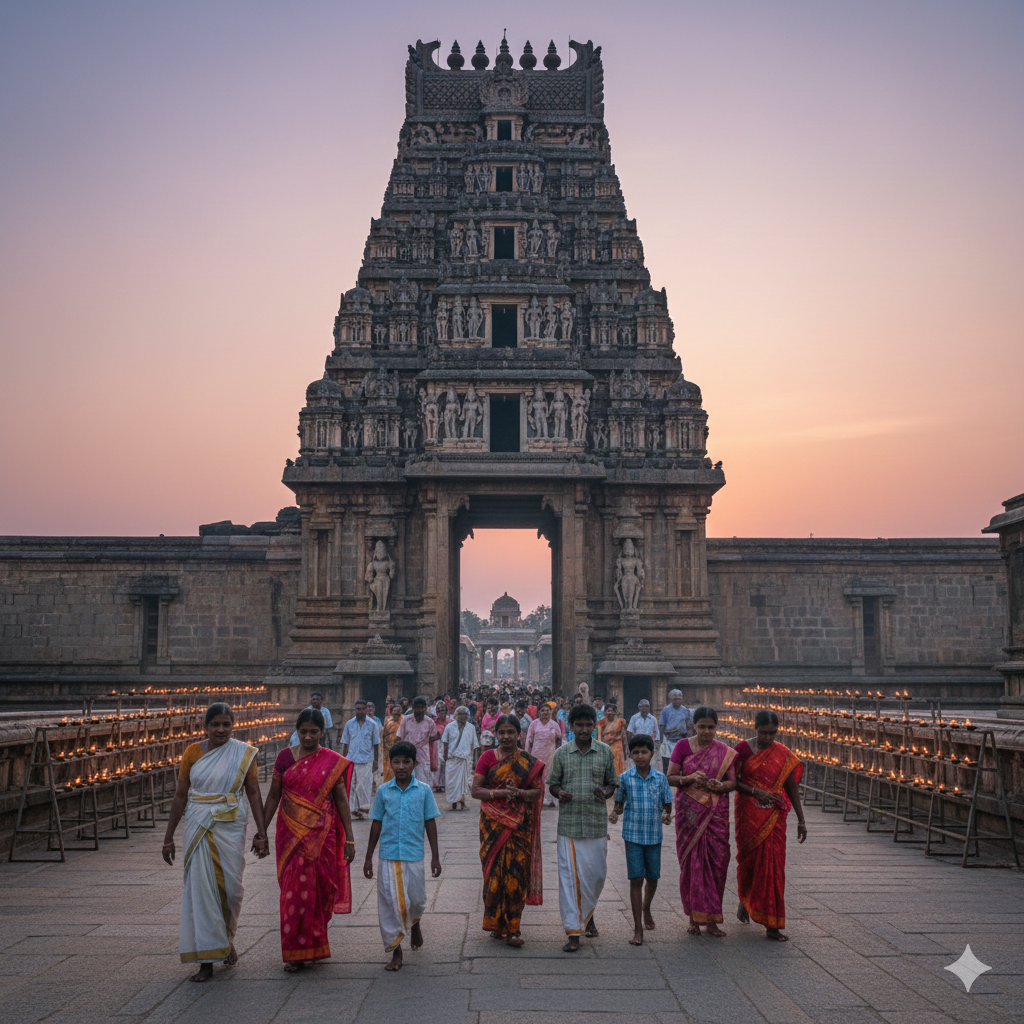
Why Tamil Nadu Does NOT Like Rama?
For years, a provocative and often viral question has resonated across India and the internet: Why does Tamil Nadu seem to hate Lord Ram? In North India, Ramlila is celebrated with devotion, and every Dussehra, effigies of Ravana are burned to symbolize the victory of good over evil. Yet, small groups of people from Tamil Nadu are occasionally seen burning Ram idols, mocking the Ramayana in speeches, or protesting public events related to Ram.
During the inauguration of the Ayodhya Ram Temple, some Tamil Nadu leaders even objected to the live telecast. These moments, constantly amplified in television debates and social media, have created a strong national perception that all of Tamil Nadu is against Ram.
But having studied Tamil Nadu’s political history, religious traditions, and cultural development in depth, and having lived among its people, I can confidently and authoritatively say that this perception is not only misguided but completely wrong. The truth lies not in widespread hatred, but in a difficult conflict between ideology, identity, and modern politics.
How the Political Conflict Over Rama Really Began(Why Tamil Nadu Does NOT Like Rama?)
This conflict does not originate in ancient Tamil culture. It primarily began with the rise of Dravidian political ideology in the twentieth century. At the center of this movement was Periyar E.V. Ramasamy, one of South India’s most influential and controversial social reformers. Periyar genuinely fought against caste oppression and social inequality, and his movement transformed Tamil society in many ways. However, in his attempt to end Brahmin dominance, he himself developed a deep hostility toward organized Hinduism. In his view, the Ramayana was not a sacred epic, but a political tool created by “Aryan” forces to dominate the “Dravidian” people.
In this story, Rama became a symbol of Northern oppression, while Ravana was reimagined as a Dravidian king who was falsely demonized. This new interpretation of ideology transformed Rama from a spiritual figure into a political target.
Rama as a Political Symbol Instead of a God
Once Rama became a political symbol, the evils of religion gradually led to public mockery of the gods. Periyar and his followers openly questioned the existence of the god in public meetings and challenged devotees to prove his power. In this environment, the Ramayana was reimagined not as a spiritual guide but as a story of racial and cultural conflict. This mindset laid the foundation for public protests that later shook the entire country.
The 1971 Salem Incident That Shook India
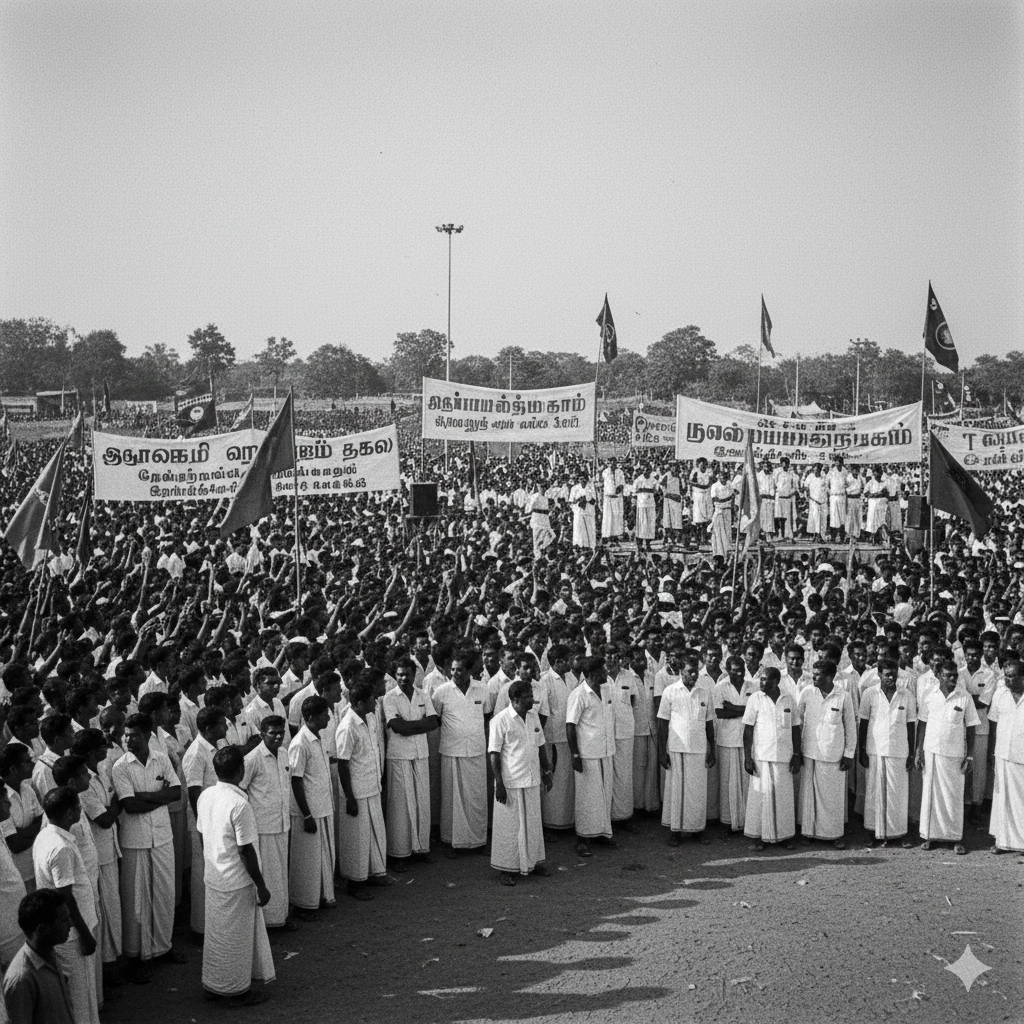
The most disturbing turning point came in January 1971, when a “Conference to Eradicate Superstition” was held in Salem. In front of the crowd, Periyar’s followers carried a large wooden statue of Lord Rama and beat it with slippers, displayed obscene posters of Rama, Sita, and even Lord Murugan, and finally burned the statue. When photographs of this incident were published in the Tamil magazine Thuglak, attributed to editor Cho Ramaswamy, the entire nation was shocked. Even in Tamil Nadu, many ordinary people were deeply saddened and angered by this act. This marked the moment when the rest of India began associating Tamil Nadu with anti-Rama sentiment, even though the act itself was carried out by a small, self-imposed group.
The Birth of “Ravana Leela” as a Political Statement
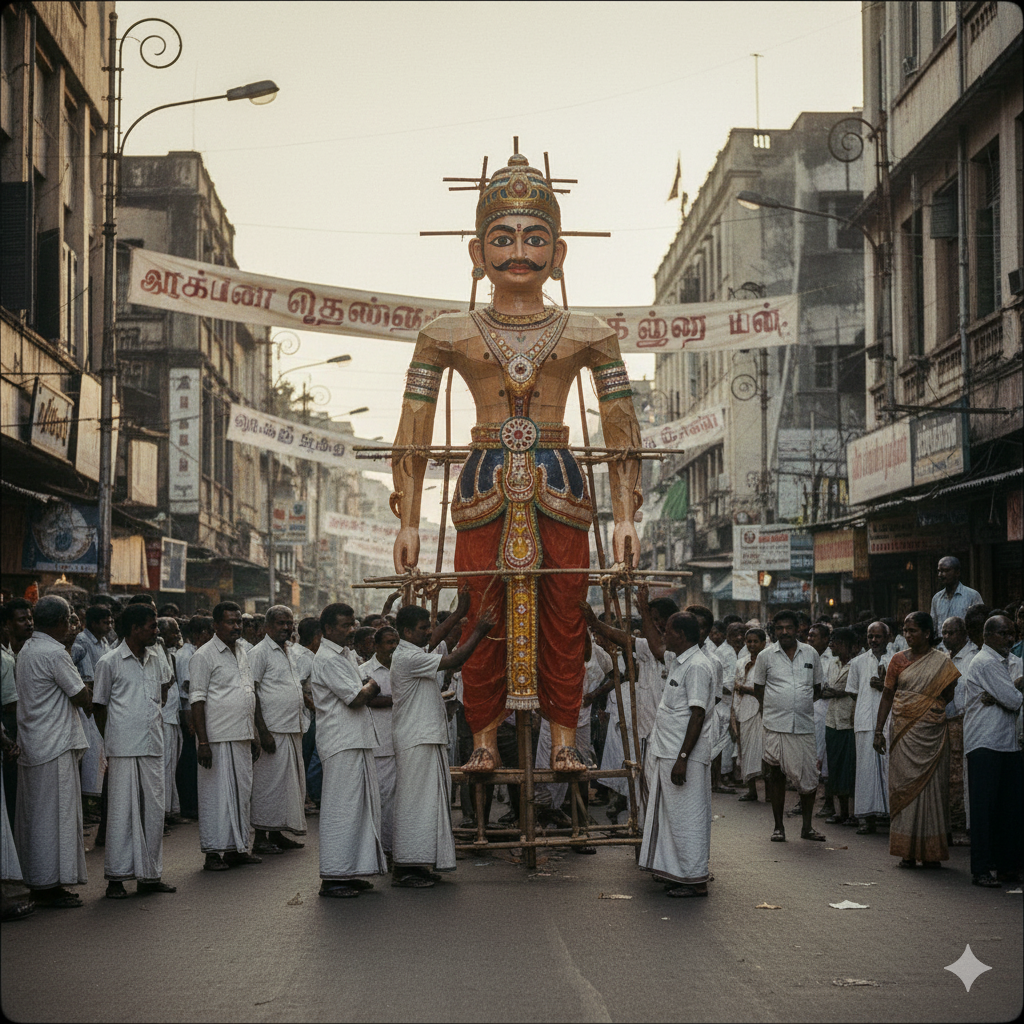
In 1974, after Periyar’s death, his followers attempted to keep his ideological legacy alive by staging what they called “Ravana Leela.” While in North India, Ramlila is traditionally celebrated and an effigy of Ravana is burned, these groups reversed this trend. In Chennai, they built large statues of Ram, Lakshman, and Sita and set them on fire as a direct political protest.
They even wrote to Prime Minister Indira Gandhi, demanding that she stop attending the Ramlila celebrations in Delhi. Indira Gandhi sternly responded, stating that the Ramayana is a cultural tradition, not a racial story. Although the organizers were arrested, a court later acquitted them, stating that no criminal violence had occurred. This legal outcome gave these small political groups the confidence to repeat such acts from time to time, simply to remain in the national headlines.
How the media transformed a small protest into the image of an entire state
One of the biggest reasons behind today’s misunderstanding is media amplification. Every time a protest involving barely fifty or a hundred people took place, the national media would portray it as if the entire Tamil Nadu had risen up against Lord Ram. Headlines used to say, “Tamil Nadu celebrates Ravana Leela,” without clarifying that the event was organized by a small political group and involved no ordinary citizens. Over time, these distorted headlines created a strong impression in the nation’s mind that Tamil Nadu rejects Ram. In reality, most ordinary Tamil citizens support neither Ram nor them.
What ordinary Tamils really believe
When you step beyond political rallies and into real Tamil homes, temples, and streets, you encounter a very different reality. Tamil Nadu is deeply spiritual, deeply devotional, and filled with living traditions that date back thousands of years. Names like Raman, Ramachandran, Sitaraman, Janaki Raman, and Pattabhiraman are common in Tamil families. There are over two hundred temples dedicated to Lord Rama throughout the state, many of which are over a thousand years old. If Tamil Nadu had truly rejected Rama, these temples would not have survived centuries of continuous worship.
Ravana is studied, not worshipped, in Tamil culture
Another misconception is that in Tamil Nadu, Ravana is worshipped instead of Rama. This is simply not true. In Tamil literature, Ravana is revered as a difficult figure—a learned king, a devotee of Shiva, an artist, and a scholar. But he is not worshipped as a god. There are no major temples dedicated to Ravana in Tamil Nadu, and you’ll find very few people named Ravana. Literature is about reverence, not religious devotion. This distinction is crucial, and it’s often deliberately overlooked in political narratives.
Kamban’s Ramayana: Evidence of Tamil devotion to Rama
Perhaps the strongest evidence of Tamil Nadu’s devotion to Rama is found in the Kamban Ramayanam, written by the Tamil poet Kamban more than a thousand years ago. This isn’t just a translation of Valmiki’s Ramayana. It’s a deeply devotional new interpretation that portrays Rama not just as a prince but as a divine embodiment of Dharma. Kamban humanizes Ravana without glorifying him and elevates Rama to the highest moral and spiritual ideal. This literary masterpiece is one of the greatest devotional works in world literature and a compelling proof that Tamil culture has always embraced Rama with reverence.
Why Politics Targets Ram but Avoids Local Gods
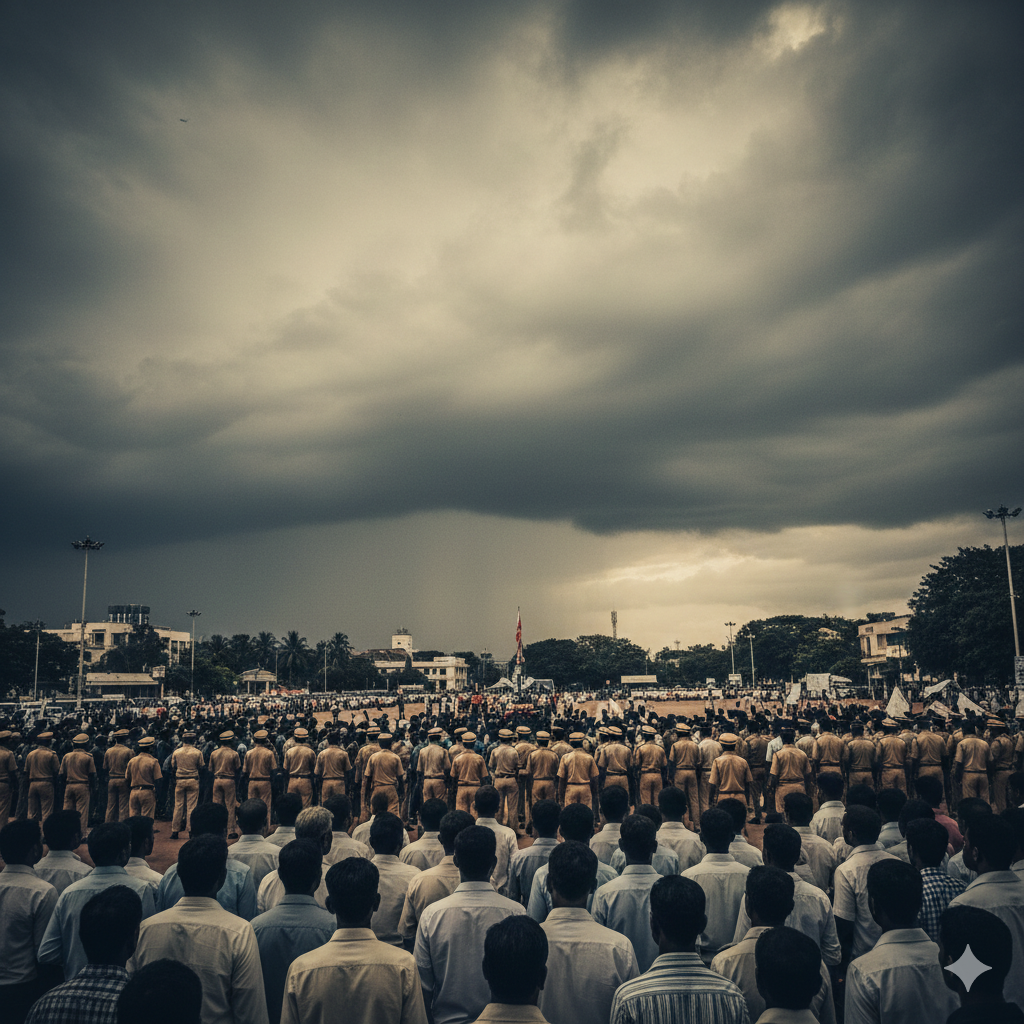
It’s surprising that these political groups never target local Tamil deities like Murugan, Amman, or Perumal. The reason is simple: the moment they insult these deeply rooted local deities, public anger erupts immediately and uncontrollably. Ram is targeted because political narratives have portrayed him as a “North Indian” symbol, making him a safe political target for identity-based protests. This confirms that this conflict is political, not devotional.
The True Relationship Between Tamil Nadu and Ram
Tamil Nadu has always had a quiet, deeply personal relationship with Ram. Here, devotion is not always expressed through noisy street celebrations, but through temple rituals, pilgrimages, poetry, fasting, and personal worship. During the holy month of Purattasi, dedicated to Perumal, thousands of families across Tamil Nadu observe strict fasts, abstain from non-vegetarian food, and visit Vishnu temples every week. The temples of Srirangam, Rameswaram, Tirupati, and countless villages are living proof that Tamil spirituality is eternally connected to Vishnu and his incarnation, Rama.

Conclusion: Tamil Nadu never hated Rama—Politics created this image
The idea that Tamil Nadu hates Lord Rama is not a religious truth—it is a political illusion created by a small ideological movement and amplified by careless media stories. The real Tamil Nadu never rejected Rama. It has preserved him for over a thousand years through poetry, temples, traditions, and personal devotion. You can question God, you can argue with God, but hatred has never been part of the Tamil spiritual ethos. Tamil Nadu does not burn Rama in its heart. It keeps them quietly, honestly, and always inside itself.
Frequently Asked Questions (FAQs)
- Does Tamil Nadu truly hate Lord Rama?
No, the entire state of Tamil Nadu does not hate Lord Rama. This perception is largely fueled by the actions of a few political and ideological groups. In reality, millions of people in Tamil Nadu worship Rama daily, and the state is home to hundreds of ancient Rama temples.
- Why do some political groups in Tamil Nadu oppose Rama?
Some Dravidian political movements have historically opposed North Indian religious movements as part of their resistance against caste dominance and Brahminical power. Over time, this opposition became mythologically linked to Rama, even though he was never rejected by the general public.
- Is Ravana worshipped in Tamil Nadu?
No, Ravana is not worshipped in Tamil Nadu. He is respected in literary discussions as a scholar and a devotee of Shiva, but there are no major temples dedicated to Ravana. Even his name is rarely used for children in Tamil families.
- What was the 1971 incident involving the burning of a Rama effigy?
In 1971, a small group of radical dissenters staged a protest where an effigy of Lord Rama was publicly desecrated and burned. While this act sparked outrage across the country, it involved fewer than 100 people and never reflected the sentiment of the general public in the state.
- Why was “Ravana Leela” performed instead of Ram Leela?
“Ravana Leela” was staged as a political counter-protest to the Ram Leela traditions of North India. Its purpose was to challenge religious narratives – not to promote Ravana as a deity.
- Does Tamil Nadu have its own version of the Ramayana?
Yes. Tamil Nadu follows the Kamba Ramayana, written by the poet Kambar approximately 1,000 years ago. It depicts Rama as a divine avatar, deeply rooted in devotion – proving the spiritual connection of Tamil society with Rama. 7. Why did some leaders oppose the inauguration of the Ayodhya Ram Temple?
The opposition was mostly political, not religious. Some leaders viewed the event as a national political spectacle rather than a cultural one. However, many ordinary people in Tamil Nadu celebrated it privately.
- Is Rama considered only a “North Indian” deity?
No. Rama is worshipped throughout India – including Tamil Nadu, Andhra Pradesh, Kerala, Karnataka, Sri Lanka, and Southeast Asia. His presence in Tamil spiritual culture is ancient and deeply rooted.
- Why do so many people in Tamil Nadu have names like Raman and Ramachandran?
Names like Raman, Sitaraman, Janakiraman, Ramachandran, and Pattabhiraman are very common in Tamil society. This itself demonstrates the long-standing emotional and cultural connection with Lord Rama.
- What is the real reason behind the “Tamil Nadu vs. Rama” narrative?
This narrative is politically amplified and driven by the media. The actions of a few extremist ideologues are repeatedly presented as the voice of the entire state. In reality, Tamil Nadu is one of the most spiritually vibrant regions of India.
- Does Tamil culture reject the worship of Vishnu or Rama?
Absolutely not. Vishnu worship, as Perumal (Balaji), is widespread in Tamil Nadu. Major temples like Srirangam, Tirupati (nearby), and Kanchipuram attest to the strength of Vaishnavism.
- What does this controversy truly reveal?
It reveals how politics can distort religious narratives and how isolated incidents can be portrayed as widespread public sentiment. On the ground, faith is far more nuanced and devotional than the headlines suggest.
Thanks for visiting us.