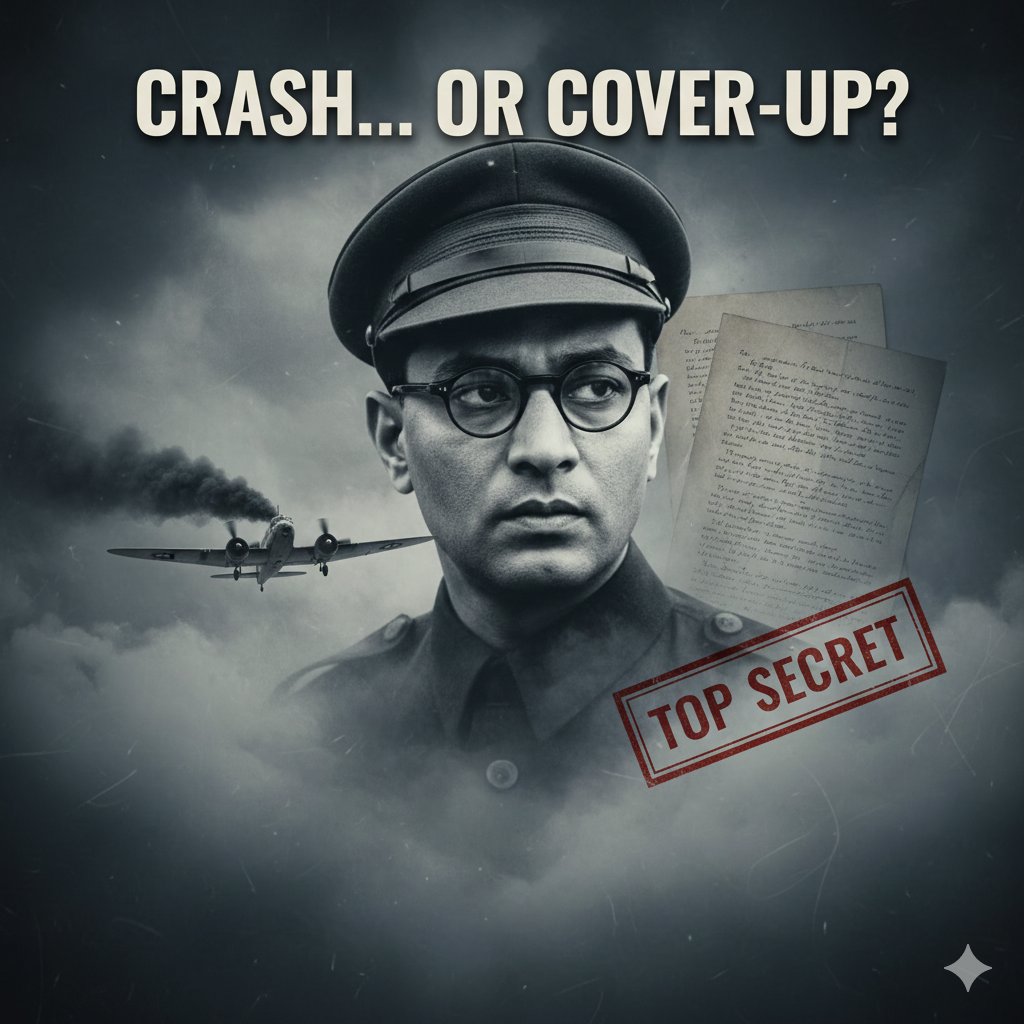
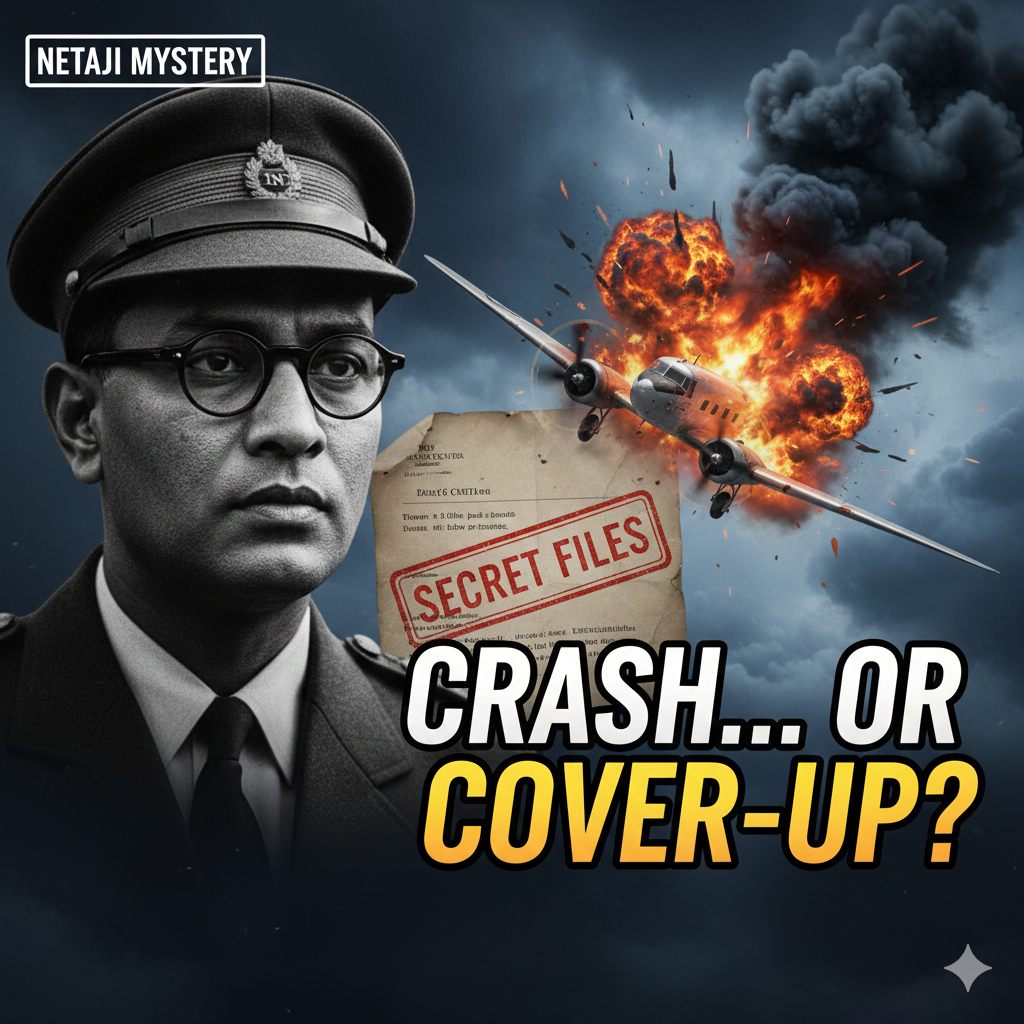
INTRODUCTION Subhas Chandra Bose
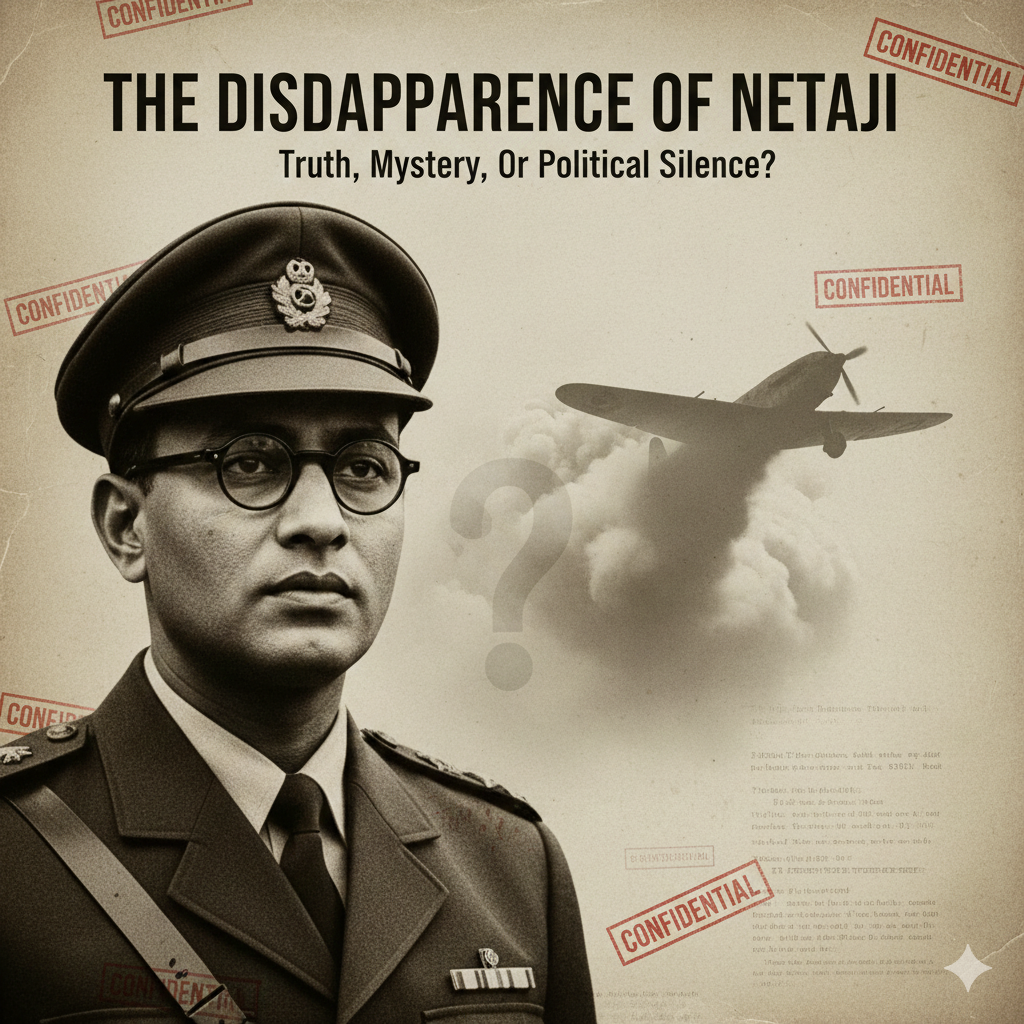
The Disappearance of Subhas Chandra Bose: Truth, Mystery, or Political Silence?
One of India’s most charismatic and controversial freedom fighters, Subhas Chandra Bose was officially declared dead in a plane crash in Taiwan in 1945. Yet nearly eight decades later, questions surrounding his fate remain unresolved. Various commission reports, declassified intelligence files, the Gumnami Baba theory, and geopolitical speculation involving the Soviet Union have kept the mystery alive.
Did Netaji really die in the crash? Did political factors influence the story? Or has incomplete evidence simply allowed other theories to flourish?
This investigative lengthy article examines official information, various theories, forensic evidence, political context, and the psychological aspects of national memory—separating documented fact from speculation.
SYNOPSIS Subhas Chandra Bose
Why Subhas Chandra Bose Still Matters Today
The Official 1945 Plane Crash Narrative
The Shah Nawaz Committee and Khosla Commission Findings
The Mukherjee Commission: A Turning Point
The Taiwan Crash Controversy
The Renkoji Temple Ashes Debate
The Soviet Union Theory: Myth or Geopolitical Reality?
The Gumnami Baba Mystery
Political Context After Independence
Why Were Files Kept Secret for Decades?
The Role of Public Emotion and National Memory
What Modern Forensics Could Still Reveal
Truth, Silence, or Historical Uncertainty?
Why Subhas Chandra Bose Still Matters
Few leaders in India’s freedom struggle possessed the emotional depth that Subhas Chandra Bose still evokes. Unlike many of his peers, Bose chose a military path to independence. Through the Indian National Army (INA), he sought to directly challenge British authority, strategically aligning with the Axis powers during World War II—a move that is still debated, but it was certainly a courageous one.
His famous slogan—”Give me blood, and I will give you freedom”—transformed him from a political opponent to a symbol of uncompromising nationalism. Yet, his disappearance in August 1945 left a void in Indian political history that has never been fully filled.
Understanding Bose’s disappearance is not simply about solving a historical puzzle. It’s about understanding how countries process incomplete stories and how political shifts shape official memory.
The Official Story of the 1945 Plane Crash (Subhas Chandra Bose)
The Indian government has long believed that Subhas Chandra Bose died in a plane crash on August 18, 1945, in Taihoku, now Taipei, Taiwan. According to Japanese records and eyewitness accounts, the aircraft—which was reportedly overloaded—crashed shortly after takeoff. Bose is said to have suffered severe burns and died a few hours later in a military hospital.
It is said that his body was cremated, and the ashes were preserved at the Renkoji Temple in Tokyo.
For decades, this account formed the backbone of official history books and government statements. However, the lack of readily available forensic verification and the geopolitical complexities of post-war Asia left room for doubt.
Findings of the Shah Nawaz Committee and the Khosla Commission
In 1956, the Indian government appointed the Shah Nawaz Committee to investigate Bose’s death. The committee concluded that Bose had indeed died in a plane crash.
In 1970, the Khosla Commission revisited the matter and reaffirmed the same conclusion.
However, critics have argued that both investigations relied more on witness testimony than on individually verified physical evidence. While witness testimony is legally valid, such major historical controversies often require a higher standard of verification.
This gap between official approval and public suspicion would widen in subsequent decades.
The Mukherjee Commission: A Turning Point
In 1999, the Indian government appointed the Mukherjee Commission to re-investigate the circumstances of Bose’s disappearance. After a thorough investigation, the commission concluded in 2005 that Bose did not die in a plane crash.
It also questioned the authenticity of the ashes at Renkoji Temple.
However, the central government rejected the commission’s findings and stood by its previous position.
This rejection exacerbated the debate rather than resolving it. For many observers, the commission’s differing conclusions created institutional confusion rather than clarity.
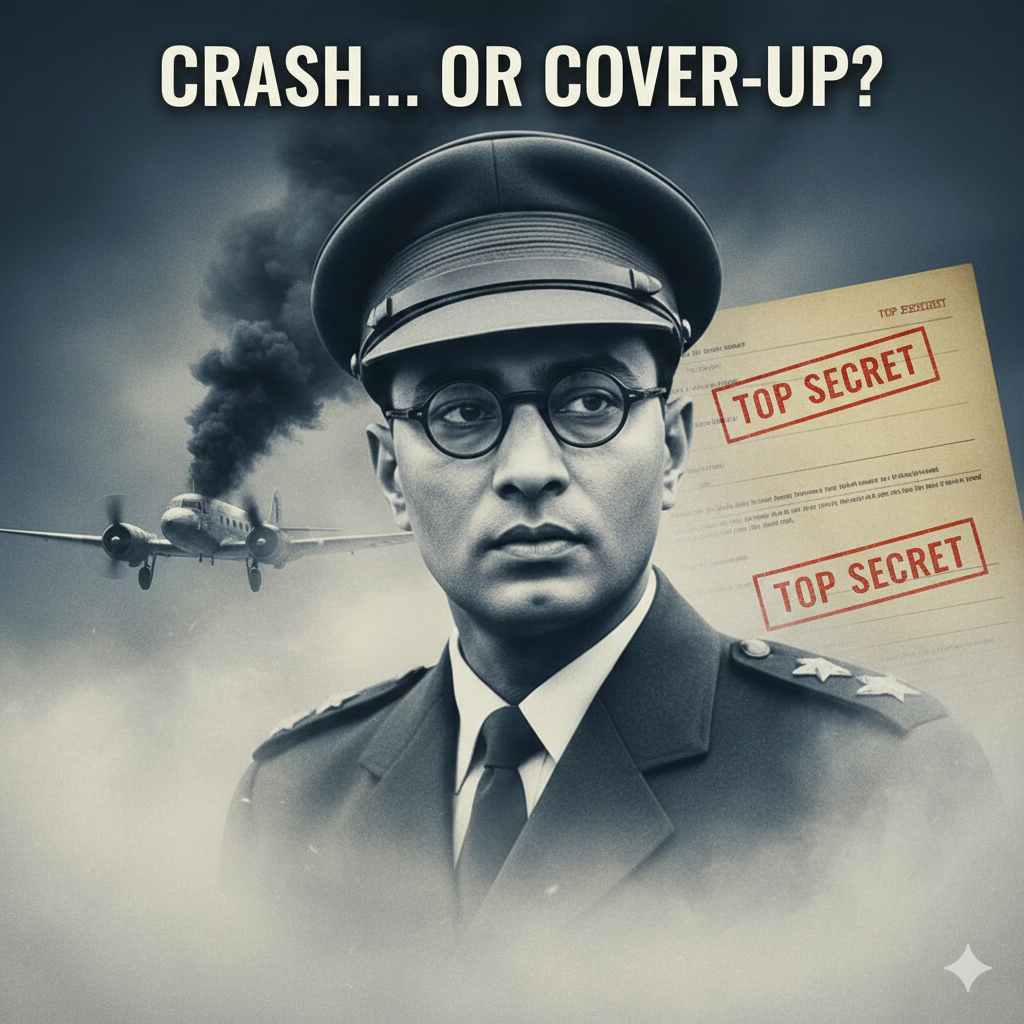
Taiwan Crash Controversy
A major source of doubt has been Taiwan’s historical records. At one point, Taiwanese authorities reportedly indicated that there was no official record of such a plane crash on the specific date mentioned.
However, historians caution that wartime documentation, especially during the turmoil following World War II, was often incomplete.
The lack of clear confirmation in the archives does not automatically render the crash theory inaccurate, but it does make it difficult.
Historical research often uncovers such documentation gaps—the question is whether these gaps indicate a cover-up or simply bureaucratic malfeasance.
Debate over the ashes at Renkoji Temple
The ashes kept at Tokyo’s Renkoji Temple remain the center of controversy. Supporters of the official story believe they are Bose’s remains. Skeptics argue that without definitive DNA confirmation, the claim remains incomplete.
Attempts to conduct DNA testing have faced practical challenges. Burned remains often degrade genetic material. Furthermore, diplomatic and religious sensitivities have made the process difficult.
With modern forensic science, definitive DNA testing may provide definitive information. However, such verification has become increasingly difficult over time.
Soviet Union Theory: Lie or Geopolitical Truth?
Another old theory suggests that Bose escaped the crash and sought refuge in the Soviet Union. According to this story, he may have been detained under Stalin’s rule or may have been in hiding due to geopolitical difficulties.
This theory gained greater traction during the Cold War, when international intelligence activities were highly secretive.
However, no publicly verified Soviet archival document conclusively proves Bose’s detention. While the theory seems plausible, the claim remains unproven.
Historians emphasize that truth does not equal proof.
The Mystery of Gumnami Baba
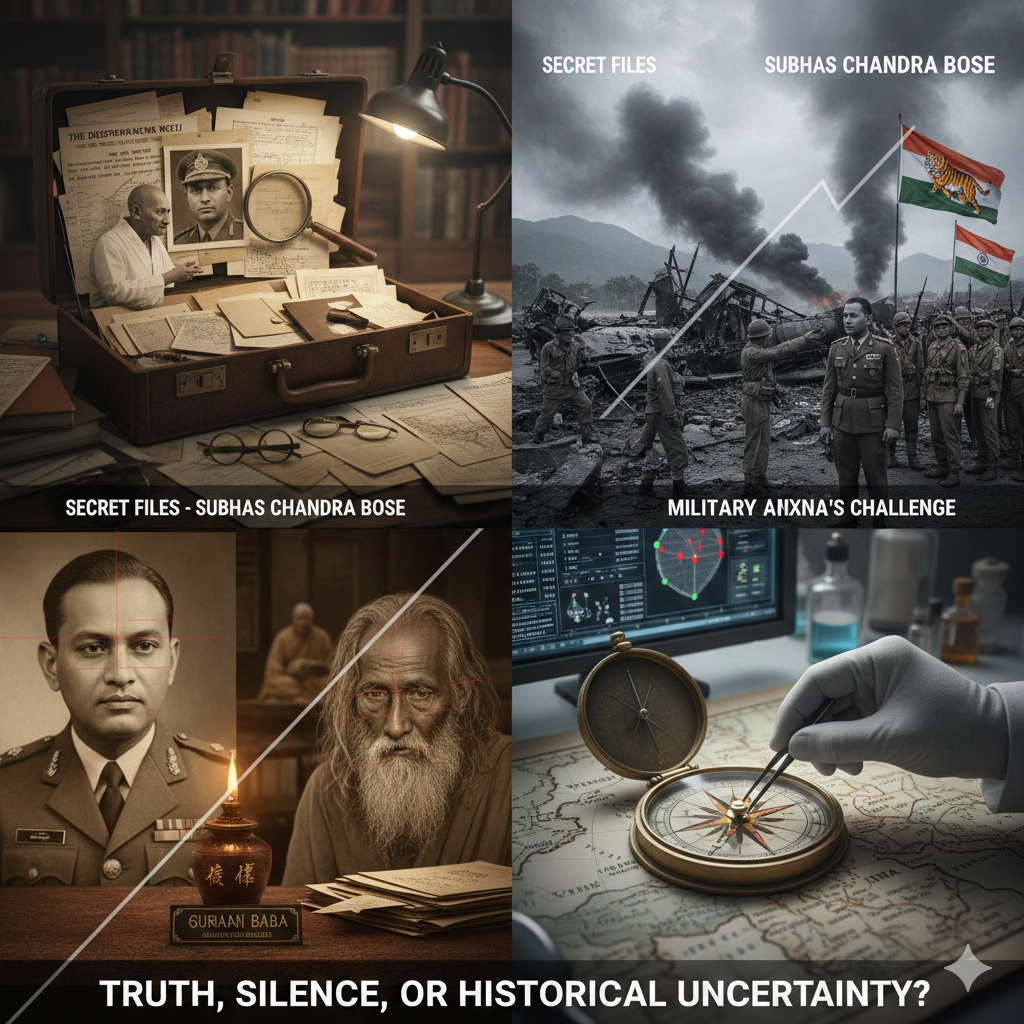
One of the most sensational claims concerns “Gumnami Baba,” a reclusive ascetic who lived for decades in Uttar Pradesh. Supporters say that items recovered after his death in 1985—including documents related to the INA—suggest he was Bose.
Handwriting analysis has yielded mixed results. Courts have not legally proven a match.
The Gumnami Baba theory illustrates how unresolved historical trauma can create powerful cultural narratives. Nevertheless, from a rigorous perspective of the evidence, it remains mere speculation.
Post-Independence Political Context
Subhash Chandra Bose had differences of opinion with prominent Congress leaders, including Mahatma Gandhi and Jawaharlal Nehru. His military approach was completely different from Gandhi’s non-violent strategy.
Had Bose returned to life after 1945, the direction of India’s political leadership might have been different.
Although political rivalry is historically documented, no concrete archival evidence proves that independent India suppressed the truth about his fate.
Historical interpretation must separate political tensions from documentary evidence.
Why were files kept secret for decades?
Successive governments classified many documents related to Bose for decades. Critics argue that secrecy breeds suspicion.
However, governments often cite national security and diplomatic sensitivities for delayed declassification.
In recent years, several files have been released, yet none have yielded a definitive forensic solution.
Delayed transparency does not necessarily indicate conspiracy—but it undoubtedly fuels speculation.
The Role of Public Emotion and National Memory
Subhas Chandra Bose holds a special place in India’s collective memory. His disappearance transformed him from a historical figure to a symbolic legend.
National memory often resists a bad ending. When a hero disappears without consequence, other stories flourish.
The persistence of Bose’s mystery reflects not only political entanglement but also emotional attachment.
What can modern forensics still reveal?
If it were possible to extract scientifically accurate DNA from preserved remains or verified personal artifacts, forensic clarity could perhaps resolve this debate.
International archival collaboration, especially with Japanese and Russian records, can also provide new information.
However, as time passes, evidence dwindles and witnesses disappear. Achieving historical certainty becomes increasingly difficult.
Truth, silence, or historical uncertainty?
After nearly eight decades, one conclusion stands:
There is no universally accepted, scientifically verified version of Subhas Chandra Bose’s death scene.
The plane crash theory remains the official version. Other theories persist, but they lack solid evidence.
This mystery persists not because of a proven conspiracy, but because of incomplete evidence and political complexity.
History sometimes offers confusion rather than answers.
And in the case of Subhas Chandra Bose, confusion has become part of his story.
Thanks for visiting us.