
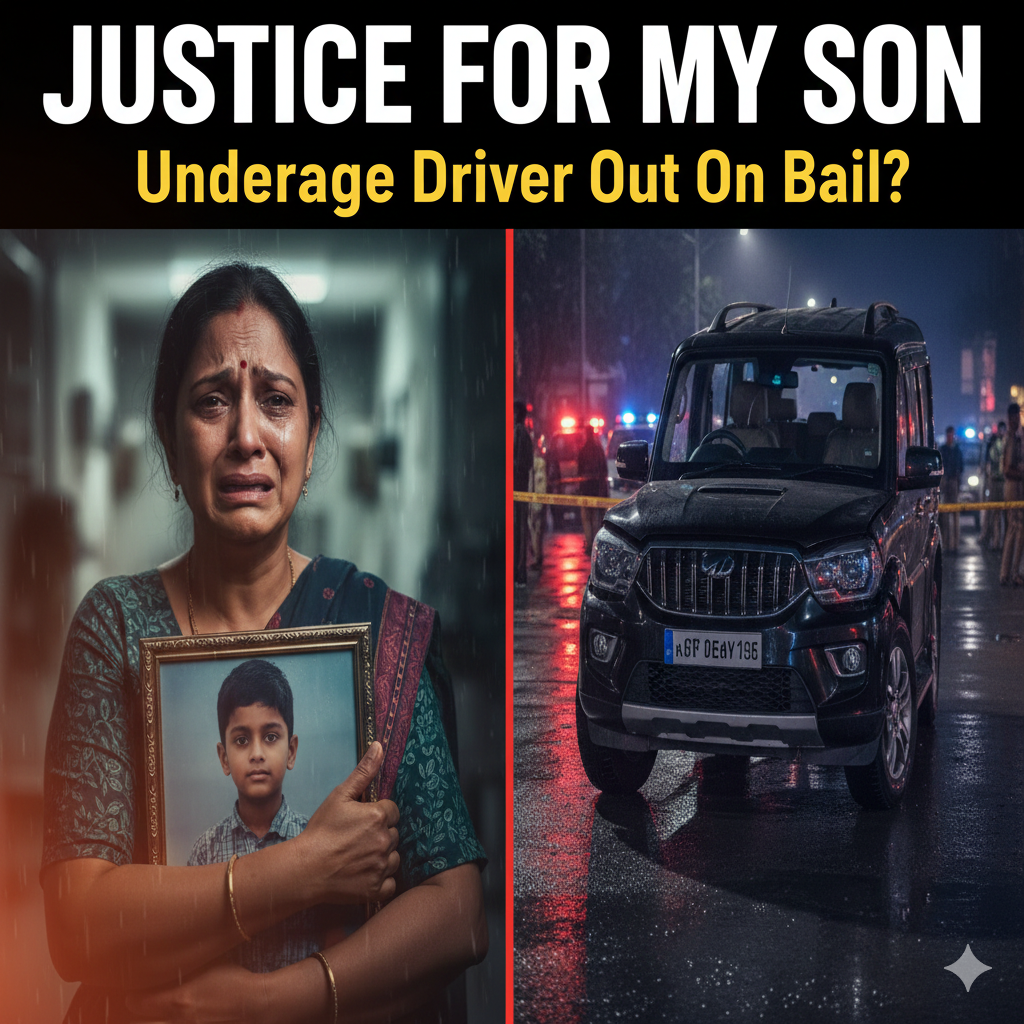
A young life ended in a moment of carelessness. Delhi Scorpio Accident News
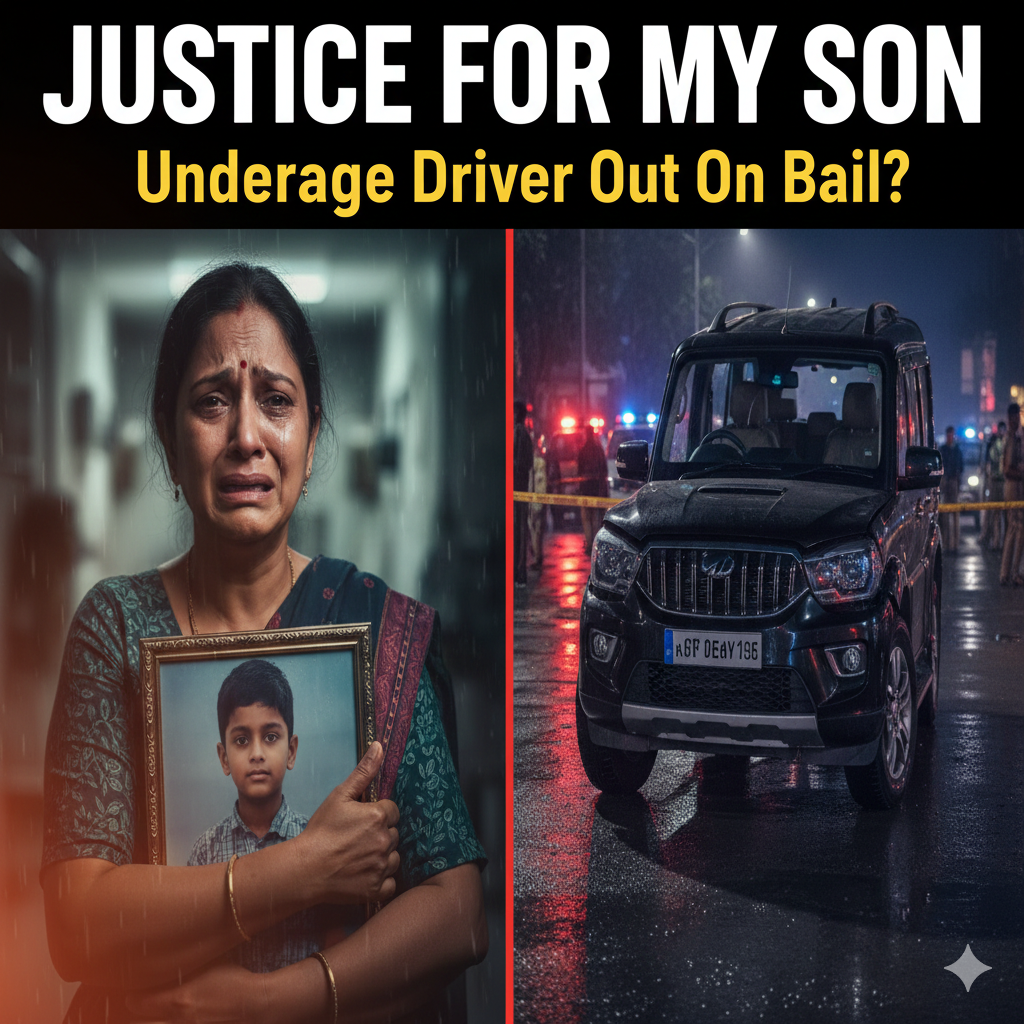
It’s a story that feels all too familiar in India—another young life lost on the road, another grieving mother seeking justice, and another debate over reckless driving that fades until the next tragic incident occurs. Just a few days ago, 23-year-old Sahil Dhaneshra was riding his motorcycle when he was reportedly hit by a speeding black Scorpio SUV. According to initial reports, the SUV’s occupants were filming social media reels at the time of the accident. Sahil died on the spot.
The driver, allegedly a minor without a valid driver’s license, was later produced before the Juvenile Justice Board and has since been granted interim bail to appear for his Class 10 board exams. This case has sparked outrage not only because of the fatal accident but also because of the circumstances surrounding it—overspeeding, previous fines, and what the victim’s family calls a shocking failure of accountability.
Table of Contents
“My son was left on the road” (Delhi Scorpio Accident News)
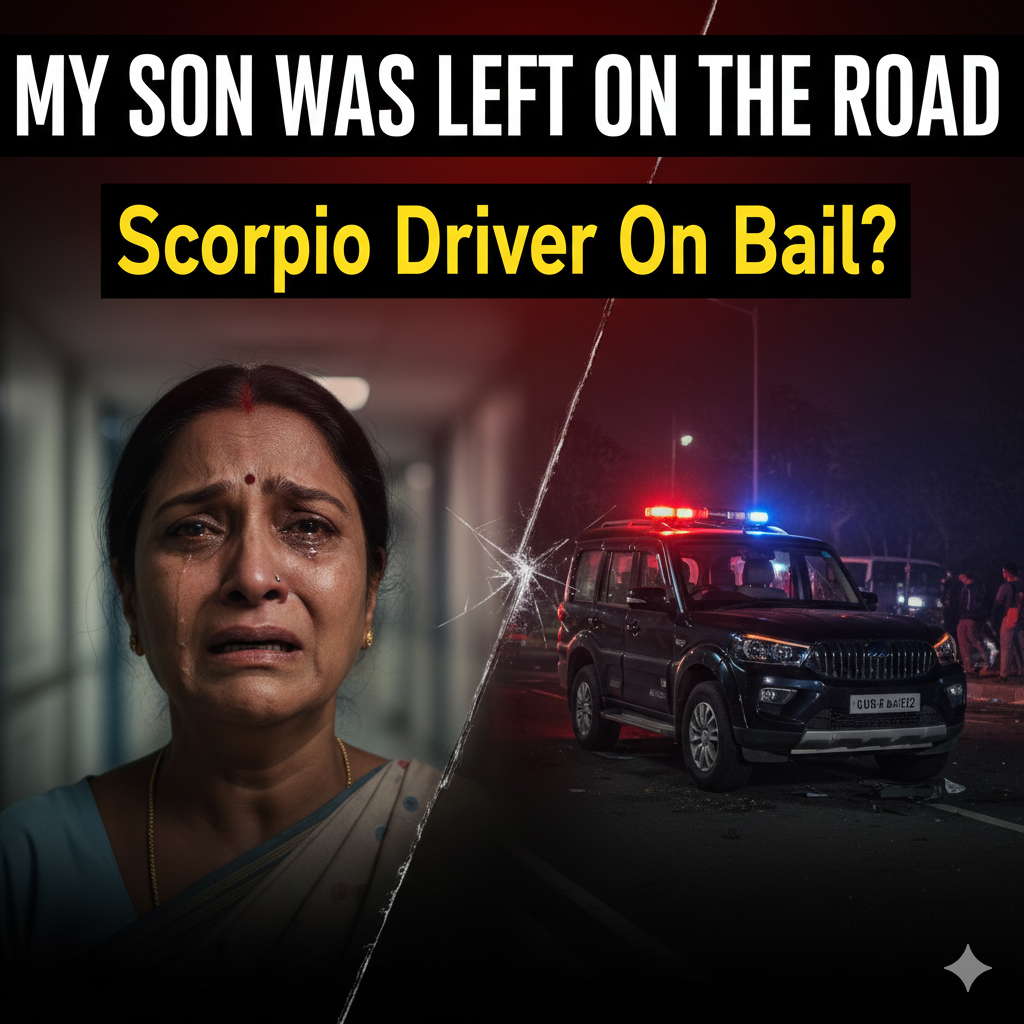
Sahil’s mother, Ina Makan, described in heartbreaking detail what she saw when she arrived at the scene of the accident. She received a call informing her that a motorcycle registered in her son’s name had been found, and a boy had been declared dead at the scene. When she arrived, she said she found her son lying on the road, his motorcycle shattered into pieces.
Her account raises troubling questions. She claims that despite an ambulance being present, her son was not immediately taken to the hospital. She says he screamed for several minutes before being taken away. Later, at the hospital, she alleges she was not allowed to take him to a private facility in a last-ditch effort to save his life. She says security personnel removed her even though she was requesting to see him one last time.
Her words—”My son was left on the road”—have become the emotional center of this case.
Allegations of Over-Speeding and Previous Violations (Delhi Scorpio Accident News)
It is reported that the Scorpio SUV involved in the accident had numerous traffic challans, many of which were related to over-speeding. According to the mother, there were at least 13 challans in Delhi alone, and more violations in Uttar Pradesh. She also alleges that the SUV was being driven at a very high speed in an institutional area where schools and offices are located.
Eyewitness accounts and video indicate that the vehicle was being driven dangerously, possibly in the wrong lane, and then veered sharply and collided with Sahil’s motorcycle. The impact was reportedly so severe that Sahil was thrown several feet into the air. The SUV also hit another vehicle and caused further damage before stopping.
If these allegations are proven true, they would indicate not just an accident, but gross negligence.
The Juvenile Justice Angle (Delhi Scorpio Accident News)
The most controversial aspect of this case is the driver’s age. The FIR states the driver’s age as 19, but media investigations suggest he may be 17—a legal minor. If this is confirmed, the case falls under the Juvenile Justice Act, which provides a different legal process than for major offenders.
The fact that the accused has been granted interim bail to appear for board exams has angered many who believe that justice for road accident victims in India is often delayed or undermined. However, under Indian law, minors are afforded some protections, and courts must balance rehabilitation and accountability.
This legal aspect complicates public emotions and fuels perceptions of injustice.
Road Rage, Reel Culture, and the Danger of SUVs (Delhi Scorpio Accident News)
Delhi and NCR have repeatedly witnessed cases of speeding SUVs, making reels on social media, and performing reckless stunts on public roads. The term “SUV reel danger” has quickly entered public conversation. Social media recognition, thrill-seeking behavior, and a lack of fear of severe punishment have created a dangerous mix.
Road safety experts say strict enforcement of traffic laws, harsher penalties for repeat offenders, and a faster legal process are urgently needed. The Sahil Dhaneshra case highlights how previous challans often fail to deter repeat offenders.
A Mother’s Appeal to the Nation
Beyond the legal debates and policy discussions, lies the deep grief of a mother who raised her son as a single parent for 23 years. In an emotional appeal, she urges parents across the country to protect their children and ensure accountability from authorities. She says she can’t bear to see another family go through what she’s going through.
Her pain resonates with so many people because it touches a common fear—that someone left home because of someone else’s negligence and may never return.
The big question: Will this case bring about any change?

Every year, thousands of road accidents result in deaths in India. Many of these are linked to overspeeding and traffic violations. Yet, systemic reform is often slow. This case now stands at a crossroads—it could either become another headline that will fade away, or it could become a reason for stronger enforcement and legal reform.
Justice in such cases isn’t just about punishment; it’s also about prevention, road discipline, and restoring public trust in institutions.
For Sahil’s mother, however, the issue is much simpler. She wants accountability. She wants recognition. And she wants the assurance that no other parent will have to say, “My child was abandoned on the road.”
thanks for visiting us.
- 23-Year-Old Sahil Killed, Mother Says ‘My Son Was Left on the Road’ Delhi Scorpio Accident News
- Ajit Bharti vs RSS Controversy: Why Is RSS Angry with Ajit Bharti? Full Story Explained
- The fastest way to end corruption in India?
- WhatsApp Facebook Instagram Ban – National Security ya Control?
- PM Kisan 2026 Update: New Eligibility Rules