

Introduction (corruption in India)
India has struggled with corruption for decades, yet despite reforms and promises, it still ranks poorly on the Global Corruption Index. Meanwhile, Singapore transformed itself from one of the most corrupt, slum-ridden countries in the 1960s to one of the cleanest and wealthiest in the world. This article explains how Lee Kuan Yew eliminated systemic corruption through strict enforcement, competitive salaries for ministers, transparent institutions, and disciplined election spending. More importantly, it analyzes whether India can truly learn lessons from Singapore to reduce political corruption and accelerate economic growth.

Why corruption still permeates Indian politics (corruption in India)
When Prime Minister Narendra Modi came to power in 2014, eliminating corruption was one of his key promises. Nevertheless, corruption remains a major concern in India—from petty bribes in the traffic department to large-scale political scandals during election season.
According to Transparency International, India ranks 96th out of 180 countries in the Corruption Perception Index. The World Justice Project, meanwhile, ranks India 79th out of 142 countries in its rule of law rankings.
While some consider global rankings biased, everyday experiences speak for themselves. Election season often sees the distribution of cash, freebies, and misuse. Despite decades of reforms, corruption continues to fester in the system.
So the real question is: is there a quick, proven way to eliminate corruption in India?
Surprisingly, the answer may lie in Singapore.
Table of Contents
Singapore in the 1960s: A Corrupt, Broken Country
Today, Singapore is a global financial hub. But in the 1960s, it seemed like a failing country.
Nearly 70% of its population lived in slums. The Singapore River was dirty and smelly. Community riots were frequent. Corruption was so commonplace that it is said that there were unofficial “rate cards” for bribes.
Singapore had no oil, no natural resources, limited land, and even struggled to find fresh water. Poverty and corruption were deeply intertwined.
Then came a leader who changed everything.
The Lee Kuan Yew Revolution (corruption in India)
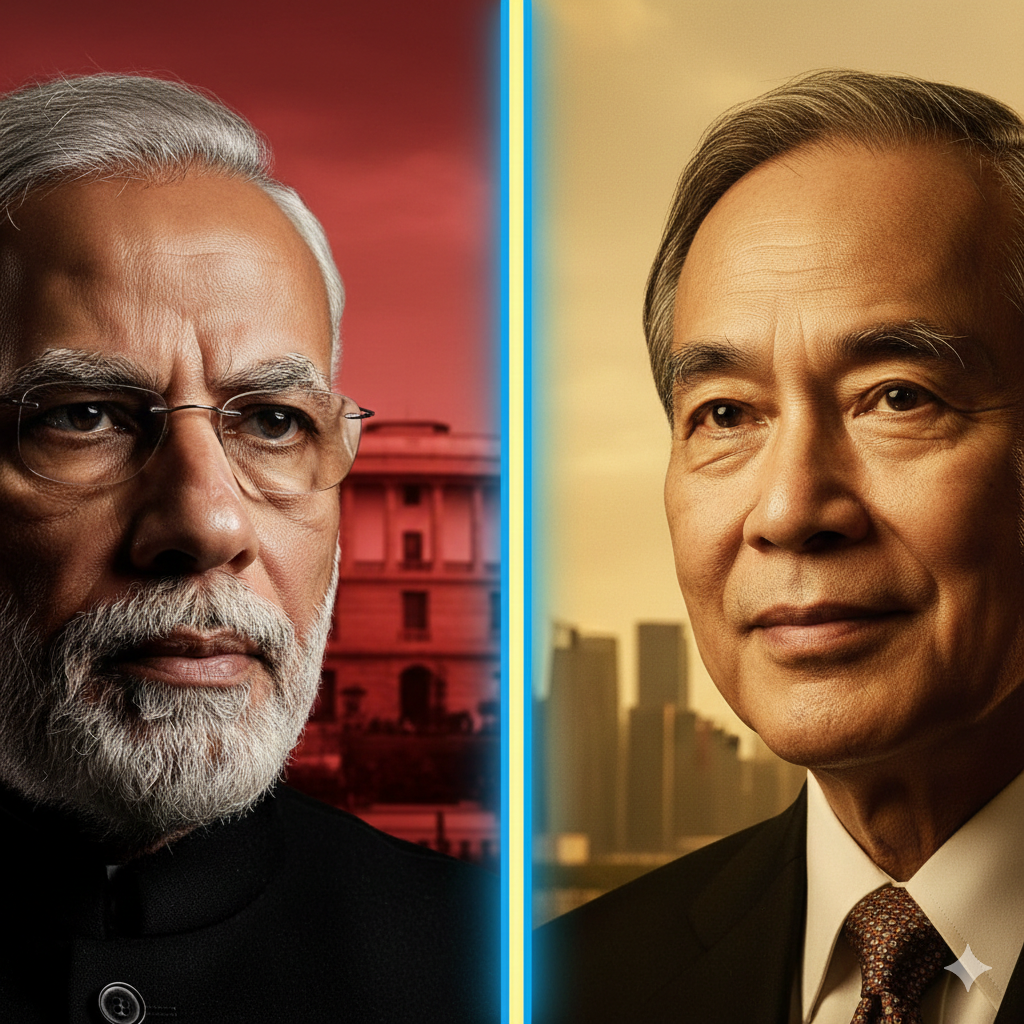
This transformation began under Singapore’s founding Prime Minister, Lee Kuan Yew.
Under his leadership, Singapore’s per capita income rose from around $500 in 1965 to nearly $90,000 today. The country went from slum-dwelling poverty to one of the world’s wealthiest.
But how did he eliminate corruption so effectively?
The answer lies in three powerful governance strategies.
Strategy 1: Costly Signaling – Leadership by Example
In game theory, signaling means that talk is cheap—real commitment must be costly to fake.
When the British left Singapore, they gave the Prime Minister a magnificent colonial bungalow, Sri Temasek. Lee Kuan Yew refused to live there. He chose a simple life to signal that leadership is about service, not privilege.
In India, by contrast, political power is often demonstrated through convoys, bungalows, and visible privilege. Symbolism matters. When leaders display complacency, it creates cultural pressure downward throughout the system.
Strategy 2: Prevention with certainty, not seriousness
India has agencies like the CBI and ED, but cases often drag on for decades. Thousands of investigations remain pending. Convictions take years—sometimes even longer than a political career.
Singapore empowered the Corrupt Practices Investigation Bureau (CPIB), which reports directly to the Prime Minister and can reach the President if obstructed.
If the CPIB suspects large sums of money, the burden of proof falls on the accused. Most importantly, cases are resolved quickly—often within a year.
Singapore’s conviction rate is approximately 98–99%.
This changes the psychology of corruption.
In India, convictions are less likely and more likely to be delayed. In Singapore, punishment is swift and almost certain. And punishment—not severity—is what actually deters corruption.
Strategy 3: Pay leaders market-aligned salaries
Lee Kuan Yew believed that running a country is more difficult than running a company. So why pay ministers the same salaries as clerks?
Singapore sets ministerial salaries based on the average income of top earners in the private sector, less the public service discount. Entry-level ministers reportedly earn around $1 million annually. Prime Ministers earn more than most global leaders.
The logic is simple:
If you want top talent, pay them transparently—so they don’t earn money secretly.
However, in India, elections can reportedly cost candidates crores, while official salaries remain quite low. This creates a structural incentive to “recover investments” after winning.
The problem isn’t just greed. This is the economic model of politics.
The real reason: Expensive elections
In Singapore, candidates have strict spending limits—just a few dollars per voter. Audits are rigorous. Excessive spending can cost you your seat.
In India, unofficial campaign spending is often exorbitant. When entry costs are high, corruption becomes a payment method.
You can’t build honest governance on financially poor elections.
This is the key structural difference.
The economic results speak for themselves.
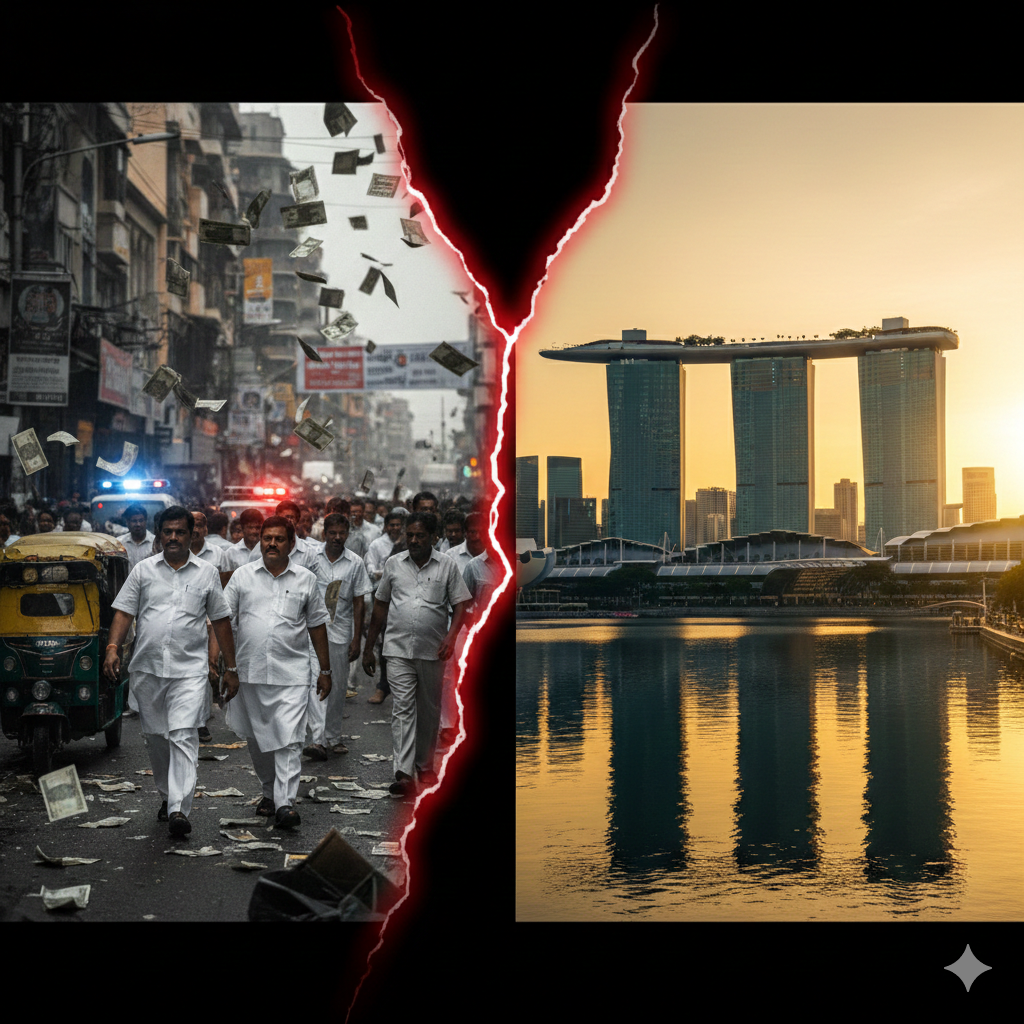
Over five decades, Singapore’s per capita GDP increased significantly. Slums were transformed into world-class public housing. A once-filthy river became a global tourist attraction.
The anti-corruption model not only improved governance—it also accelerated economic growth.
A clean system attracted global investors. Investors’ confidence led to industrial expansion. Industrial growth brought prosperity.
Can India Apply the Singapore Model?
India and Singapore are vastly different in size and diversity. But this isn’t about blindly copying policies.
Even Deng Xiaoping studied Singapore’s governance model before launching China’s economic reforms.
The lesson isn’t scale—it’s structure.
India can adopt the following core principles:
Increasing the certainty of punishment
Reforming election financing
Depoliticizing investigative agencies
Aligning political compensation with accountability
Implementing time-bound corruption trials
System reform should focus on inputs, not just outcomes.
Three Non-Negotiable Laws of Governance
First, honesty has a price. If you pay too little, corruption fills the gap.
Second, deterrence comes from certainty, not strictness. A small but firm punishment is more effective than a harsh but impossible one.
Third, you can’t expect honest output from corrupt inputs. If elections are financially flawed, governance will be as well.
Final Thoughts: India’s Choice
India stands at a crossroads. With a young population, growing global influence, and expanding digital infrastructure, there’s an opportunity for change.
The real question isn’t whether Singapore’s model can be copied.
The real question is whether India is willing to address the economic and structural roots of corruption.
Because history demonstrates a truth that cannot be denied:
Corruption isn’t eradicated by speeches.
It’s eradicated by system design.
And systems can be redesigned.
Thanks for visiting us.