
Bangladesh’s Security Situation: Growing Discontent, Internal Tensions, and Regional Implications
Introduction (Bangladesh’s Security Situation
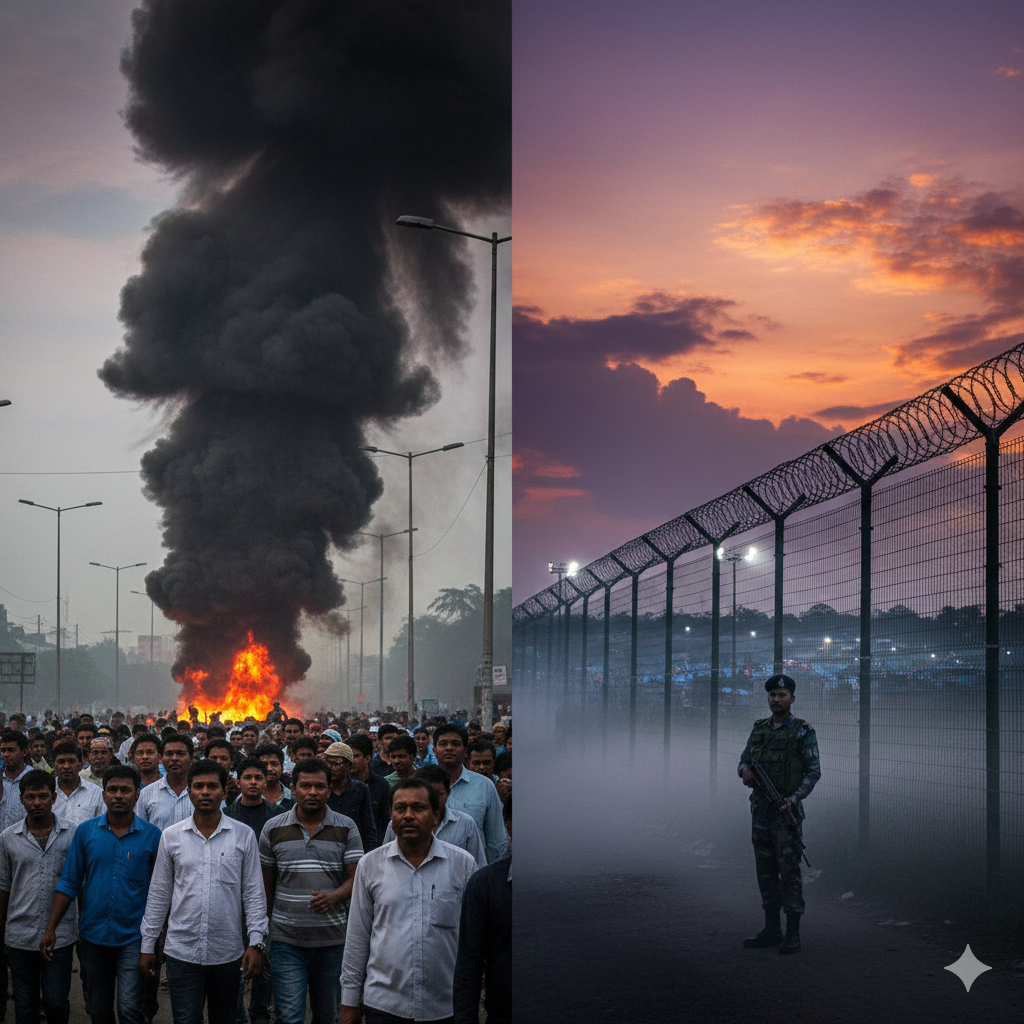
The security situation in Bangladesh has reached a critical juncture of uncertainty. Over the past few months, incidents of violence, political unrest, and escalating social tensions have raised serious questions about internal stability and governance. What initially appeared to be isolated incidents are now being viewed as part of a larger pattern with potentially far-reaching consequences. As Bangladesh struggles to maintain order amidst political and economic pressures, the impact of this instability (Violence in Bangladesh) is no longer confined to its borders. Regional observers, policymakers, and neighbouring countries are closely watching how the situation unfolds.
In recent times, Violence in Bangladesh has witnessed a surge in violence due to political instability, social tensions, and a weak law and order situation. Street protests, clashes between rival political groups, and confrontations with security forces have become commonplace, often resulting in injuries, property damage, and disruptions to daily life. Alongside political violence, mob attacks, communal clashes, and criminal activities such as extortion and assault have further heightened feelings of insecurity among the population. Minority communities have also occasionally been targeted and subjected to violence during periods of unrest, raising concerns about social harmony and the protection of vulnerable groups. Overall, the recurring incidents of violence reflect deep-seated governance challenges and continue to impact public safety, economic activity, and national stability.
Violence in Bangladesh
Persistent instability has fueled political violence, marked by frequent protests, strikes, and clashes between opposing political groups and security forces.
Street demonstrations often turn violent, resulting in injuries, deaths, arson, and damage to public and private property.
Mob violence in Bangladesh has become a serious concern, including lynching’s and attacks fuelled by rumours, political incitement, or communal tensions.
Minority communities face heightened risks, including targeted attacks and vandalism of homes, businesses, and places of worship.
Crime-related violence, such as extortion, robbery, and assaults, has increased, particularly in urban areas.
The spread of misinformation and rumours on social media has triggered spontaneous outbreaks of violence in Bangladesh and its several regions.
Harsh tactics by security forces, including mass arrests and excessive force, have sometimes exacerbated tensions rather than de-escalated them.
The recurring violence in Bangladesh has disrupted daily life, economic activity, education, and transportation, fostering fear and uncertainty among the population.
No single culprit can be held responsible for the violence in Bangladesh rather, it is the result of a confluence of multiple actors and structural factors over time. Opposition political parties and their affiliated groups play a significant role, as power struggles, street mobilizations, and attempts to assert dominance often lead to clashes, arson, and attacks. Political patronage networks sometimes shieldviolence in Bangladesh elements, perpetuating unrest with limited accountability.
Extremist and radical groups are another contributing factor, exploiting political instability and social grievances to incite violence, particularly against minorities and cultural symbols. Criminal gangs and local strongmen also capitalize on the weak rule of law during periods of unrest, engaging in extortion, land grabbing, and violent intimidation for personal gain.
Mobs fueled by misinformation and rumors, often spread through social media, have been responsible for sudden outbreaks of communal and mob violence. Furthermore, shortcomings in governance and law enforcement, including delayed responses, selective policing, and the use of excessive force, have sometimes exacerbated the situation rather than de-escalated it.
In short, violence in Bangladesh stems not from a single group or individual, but from a complex interplay of political rivalry, extremist influence, criminal opportunism, mob behaviour, and institutional weaknesses.
Summary(Bangladesh’s Security Situation)
Bangladesh is facing growing internal security challenges stemming from political polarization, street-level violence, economic strains, and declining public trust in institutions. The period of unrest has heightened fears among minority and vulnerable communities, while the governance apparatus appears strained in managing the recurring points of tension. As the instability escalates, the regional implications—particularly for neighbouring India—are becoming increasingly significant. This situation underscores the urgent need for restraint, institutional credibility, and long-term political dialogue, rather than short-term reactive measures.
Outline(Bangladesh’s Security Situation)
- Background to Bangladesh’s Current Security Challenges
- Street Violence and Political Polarization
- Minority Security and Humanitarian Concerns
- Institutional Tensions and Governance Challenges
- Regional Influences and Cross-Border Concerns
- Information, Narrative Warfare, and the Role of Restraint
- Conclusion: The Way Forward for Bangladesh
Background: How the Security Situation Deteriorated(Bangladesh’s Security Situation)
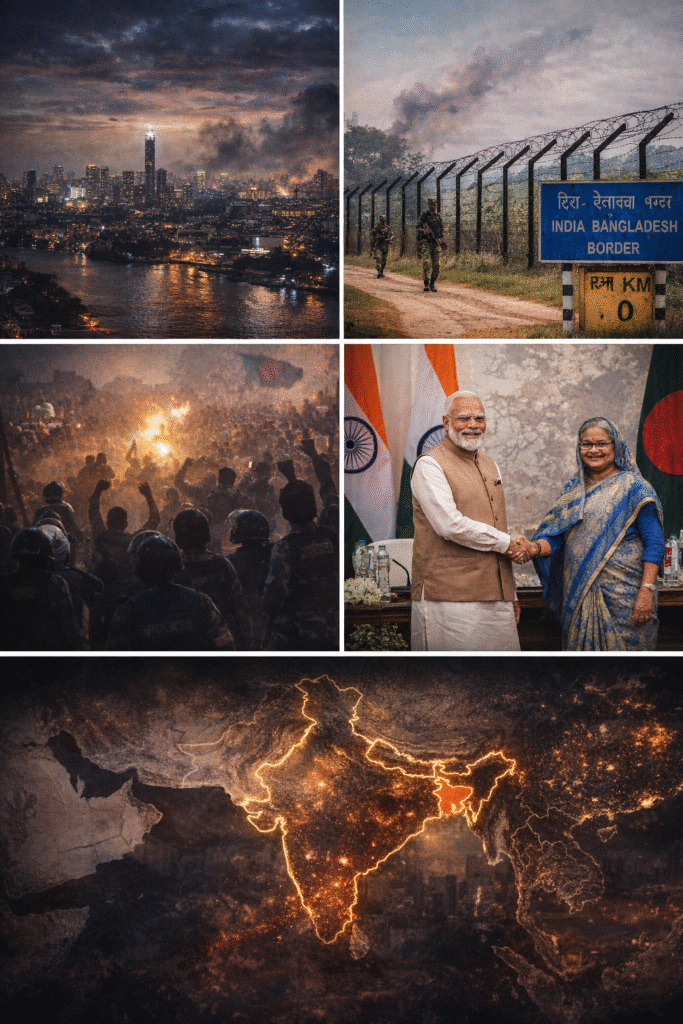
Bangladesh has long experienced a complex interplay of economic progress and deep-seated political rivalries. While the country has made strides in manufacturing, infrastructure, and development indicators, unresolved political tensions have continued to simmer beneath the surface. Rising inflation, employment concerns, and economic uncertainty have further fueled public frustration. In this environment, protests and political demonstrations have become more frequent, some of which have escalated into violence. Recurring security incidents, including vandalism of public property and localized explosions, have heightened public anxiety and placed continuous pressure on law enforcement agencies.
Street Violence and Political Polarization (Violence in Bangladesh)
Political polarization remains one of the primary drivers of Bangladesh’s security challenges. Competing political rhetoric dominates public discourse, leaving limited room for compromise or consensus. Protests that begin peacefully often devolve into confrontations, disrupting daily life and economic activity. When political disputes spill from institutions into the streets, the consequences are far-reaching. Businesses close, transportation is disrupted, and ordinary citizens face uncertainty. Law enforcement responses, while aimed at restoring order, sometimes deepen mistrust when perceived as inconsistent or excessive, further fuelling discontent.
Minority Security and Humanitarian Concerns (Violence in Bangladesh)
Periods of instability often place minorities and vulnerable communities at greater risk, and Bangladesh is no exception. Reports of fear, intimidation, and social pressure among minority populations have raised humanitarian concerns. While authorities continue to emphasize equal protection under the law, perceptions of unequal enforcement persist. Even isolated incidents can have a disproportionate psychological impact, exacerbating feelings of insecurity and concerns about migration. Addressing these concerns requires visible security, swift accountability, and the assurance that the rule of law is applied equally to all. Institutional Strain and Governance Challenges
A key characteristic of the current security situation is the strain on Bangladesh’s institutions. Managing unrest without exacerbating it requires coordination among the political leadership, law enforcement, and the judiciary. Public trust erodes when responses appear delayed or selective. Institutions function best when they are transparent, predictable, and free from political pressure. Without these qualities, recurring cycles of protest and enforcement risk becoming normalized, undermining long-term stability.
Regional Implications and Cross-Border Concerns (Bangladesh’s Security Situation)
Instability in Bangladesh has regional consequences, particularly for India. Shared borders, economic ties, and population movements mean that prolonged unrest can complicate border management, disrupt trade, and strain diplomatic relations. The broader stability of South Asia depends on internal order within its key states. A weakened security environment in Bangladesh can impact regional supply chains and security cooperation, making this crisis not merely a domestic issue but a matter of collective concern.
Information Warfare and the Risk of Escalation (Bangladesh’s Security Situation)
Another critical aspect of Bangladesh’s security situation is the role of information. Social media platforms disseminate rumours, misinformation, and emotionally charged narratives at unprecedented speed. False claims can escalate tensions faster than events on the ground, complicating response efforts. Responsible communication by authorities, restraint from political actors, and verification by media organizations are crucial to preventing the situation from spiralling out of control. When misinformation prevails, both security and public trust suffer.
Conclusion: The Way Forward (Bangladesh’s Security Situation)
The evolving security situation in Bangladesh reflects a confluence of political, economic, and social pressures. While restoring law and order is an immediate necessity, lasting stability will depend on deeper reforms, institutional credibility, and meaningful political dialogue. For the region, Bangladesh’s stability is not optional—it is essential. How the country navigates this period will shape not only its internal future but also the broader balance of South Asia. Calm leadership, honest debate, and inclusive governance are the only sustainable path forward.
Table of Contents (Bangladesh’s Security Situation)
- 23-Year-Old Sahil Killed, Mother Says ‘My Son Was Left on the Road’ Delhi Scorpio Accident News
- Ajit Bharti vs RSS Controversy: Why Is RSS Angry with Ajit Bharti? Full Story Explained
- The fastest way to end corruption in India?
- WhatsApp Facebook Instagram Ban – National Security ya Control?
- PM Kisan 2026 Update: New Eligibility Rules