
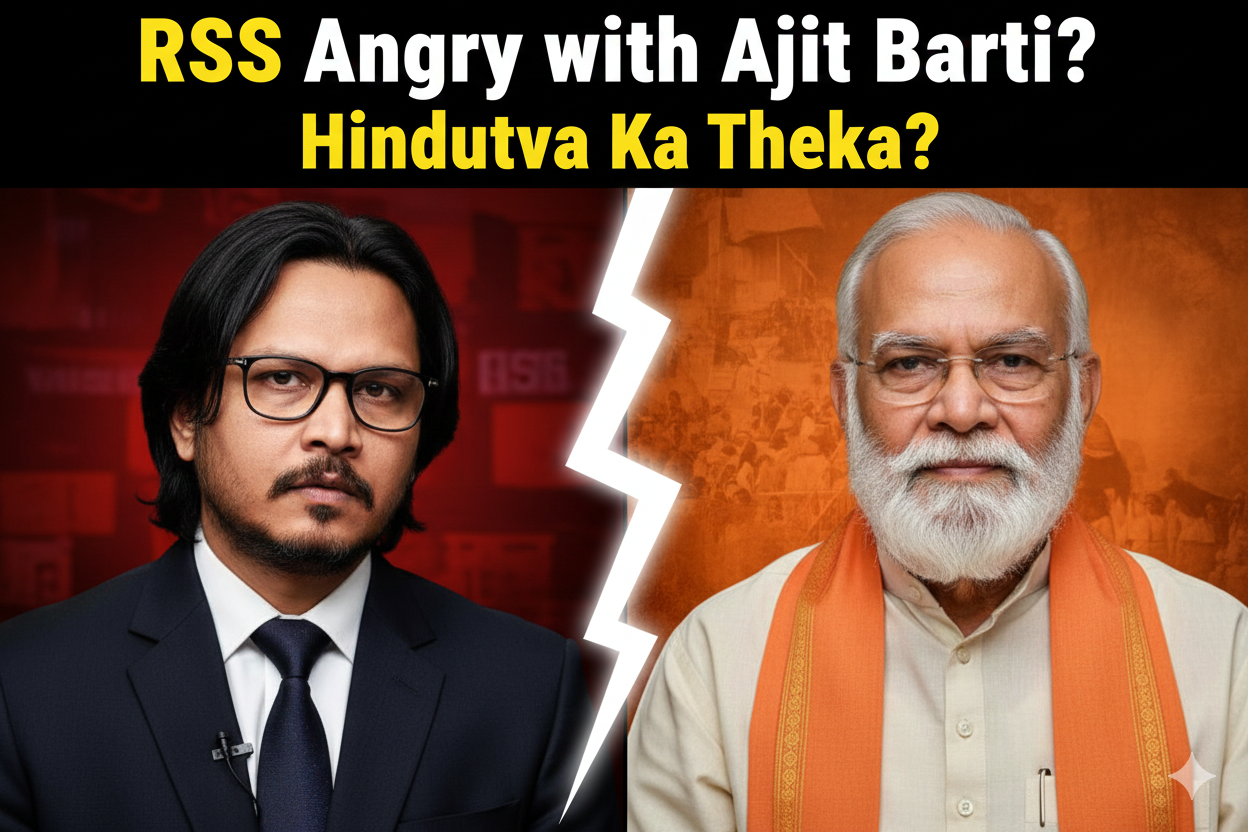
A Public Dispute Few Expected (Ajit Bharti vs RSS Controversy)
In a case that has sparked heated debate within India’s nationalist circles, journalist and YouTuber Ajit Bharti has opened up about a tense conversation he had with Rashtriya Swayamsevak Sangh (RSS) chief Mohan Bhagwat. The controversy began when Bharti released a detailed video explaining why he believes some sections of the RSS ecosystem are upset with him. What may have been an internal disagreement has now become a public ideological moment, drawing the attention of supporters, critics, and political observers alike.
The Question That Started the Feud
According to Ajit Bharti, the tension stemmed from a question he asked during a closed-door discussion attended by approximately 200 journalists and influencers. His concern was about victims of political violence, particularly in states like West Bengal. Bharti claims that while meeting with affected families, he found a lack of structured institutional support. His suggestion to the RSS chief was straightforward: could the organization consider creating a special financial fund—perhaps ₹50 to ₹100 crore—to provide legal, financial, and emotional support to the families of those killed in political conflicts?
Bharti says his question was not accusatory, nor was it a demand for political action or confrontation. Instead, he framed it as a humanitarian and organizational concern. However, he alleges that Mohan Bhagwat’s response was sharp and unexpected.
Has the RSS taken the contract of Hindutva?
The line that now dominates this controversy is Bhagwat’s statement: “Has the Sangh taken the contract of Hindutva?” Bharti recalls being surprised by both his tone and words. He argues that his question was about structured support mechanisms, not whether the RSS alone has the responsibility to protect Hindu society. To him, this reaction didn’t seem to fit the suggestion.
However, RSS supporters interpret this differently. They argue that Bhagwat’s larger vision emphasizes social responsibility—that communities should organize and support themselves rather than outsourcing everything to a single institution. From this perspective, this statement wasn’t meant to dismiss concerns, but rather a reminder of social participation. Nevertheless, Bharti insists that this conversation reveals a deep unwillingness to address institutional shortcomings.
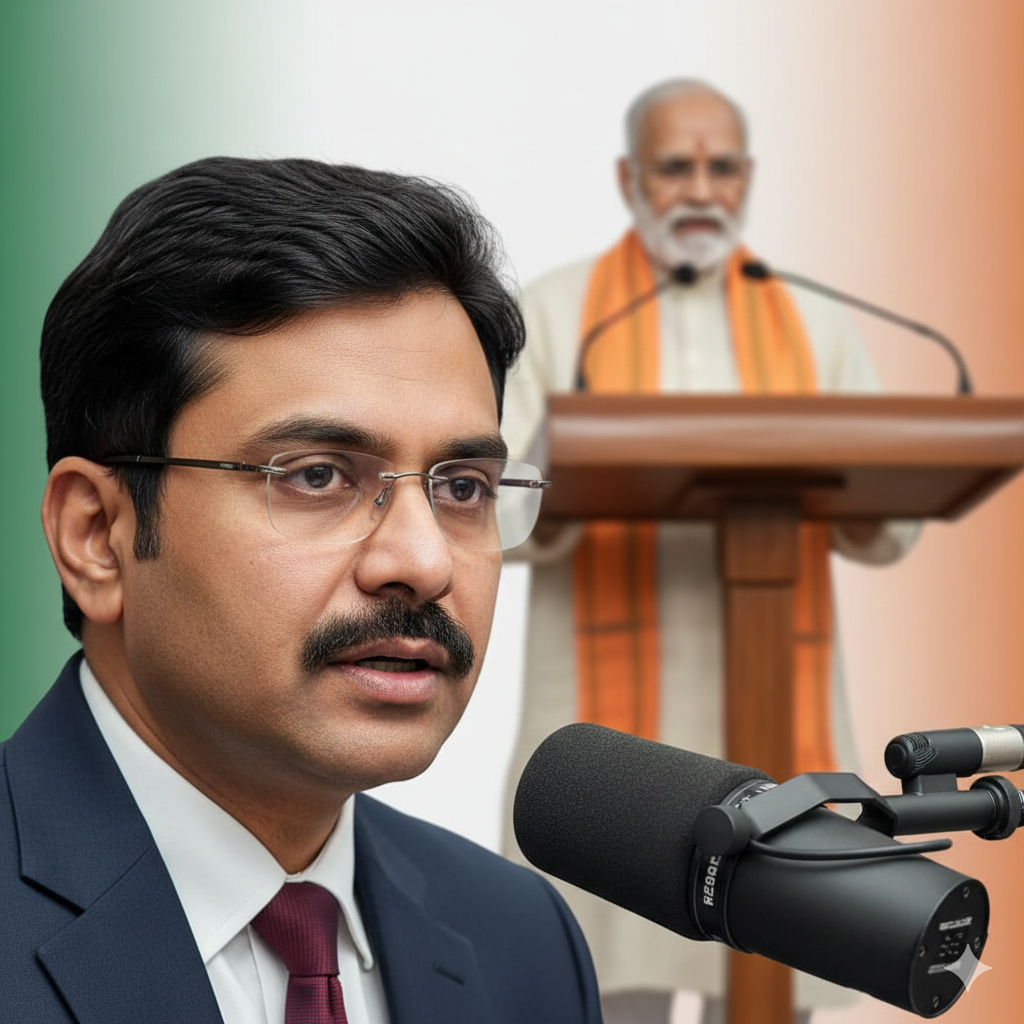
Bengal Violence and Organizational Accountability
A large part of Bharti’s criticism is based on his experiences in West Bengal. He claims that during his field visits, there was confusion regarding the number of workers killed in political clashes and the lack of centralized data or coordinated relief efforts. While he acknowledges that some BJP leaders provided assistance, he argues that a nationwide organization like the RSS could have institutionalized such assistance more effectively.
Opinions are divided on this point. Some consider it a valid appeal for better coordination, while others consider it wrong to publicly question a volunteer-based cultural organization that does not officially function as a political relief agency.
RSS, BJP, and the Direction of Ideology
Following the exclusive conversation, Bharti’s video delved into a more sensitive area: the changing relationship between the RSS and the BJP. She questioned whether the ideological direction still leads from the RSS to the political sphere or whether electoral considerations are now influencing the organization’s messaging. She also discussed changes in narrative emphasis, including the increased visibility of Dr. B.R. Ambedkar in RSS discourse and the gradual sidelining of certain historical figures who were once central to the Sangh narrative.
These comments further fueled the backlash. For many volunteers, such commentary veers into internal ideological territory, which is best discussed in private. However, Bharti maintains that public discourse regarding public statements is appropriate and necessary.
UGC and the Caste Aspect
This controversy also relates to Bharti’s recent policy regarding the UGC and the ongoing criticism of caste discourse in India. He argues that some policy directions are inadvertently deepening the divide between general category communities and reserved categories. According to him, raising these issues has made him unpopular with segments of the ecosystem that prefer strategic silence.
Bharti has repeatedly stated that his campaign is organic and not driven by political funding. He claims to have rejected lucrative offers to speak for personal gain and emphasizes that his stance is driven by principles rather than partisanship.
Respect for Workers, Criticism of Leadership
Interestingly, Bharti has carefully distinguished between RSS workers and its leadership. He repeatedly praised the grassroots volunteers, acknowledging their personal sacrifice and commitment. He said his criticism was directed at the leadership.

Table of Content
Thanks for visiting us.
- 23-Year-Old Sahil Killed, Mother Says ‘My Son Was Left on the Road’ Delhi Scorpio Accident News
- Ajit Bharti vs RSS Controversy: Why Is RSS Angry with Ajit Bharti? Full Story Explained
- The fastest way to end corruption in India?
- WhatsApp Facebook Instagram Ban – National Security ya Control?
- PM Kisan 2026 Update: New Eligibility Rules